| name |
Amanita bisporigera |
| author |
G. F. Atk. in C. E. Lewis. 1906. Botanical Gazette 41: 348-352, fig. 74. |
| name status |
nomen acceptum |
| english name |
"North American Two-spored Destroying Angel" |
| synonyms |
≡ Amanitina bisporigera (G. F. Atk.) E.-J. Gilbert. 1940. Iconogr. Mycol. (Milan) 27, suppl. (1): 78, tab. 33 (figs. 3-4).
= Amanita phalloides var. striatula Peck. 1902. Bull. N. Y. St. Mus. 54: 961.
?= Amanita phalloides f. alba sensu E.-J. Gilbert. ?p.p. (“forme américaine”). 1918. Gen. Amanita Pers.: 48. [Misapplication. (See discussion under Amanita phalloides f. alba Britzelm. in Amanita Nomenclator {t.b.d.})]
= Venenarius vernellus Murrill. 1945c. Lloydia 7(4): 315. ≡ Amanita vernella (Murrill) Murrill. 1945c. Lloydia 7(4):327.
The editors of this site owe a great debt to Dr. Cornelis Bas
whose famous cigar box files of Amanita nomenclatural information
gathered over three or more decades were made available to RET for computerization
and make up the lion's share of the nomenclatural information presented on this site.
|
| MycoBank nos. |
208433 |
| GenBank nos. |
Due to delays in data processing at GenBank, some accession numbers may lead to unreleased (pending) pages.
These pages will eventually be made live, so try again later.
|
| holotypes |
A. phalloides var. striatula—NYS. V. vernellus—FLAS. |
| lectotypes |
A. bisporigera—numerous syntypes in CUP. |
| selected illustrations |
E.-J. Gilbert. 1941. Iconogr. Mycol. (Milan) 27, suppl.: 329, tab. 45. |
| intro |
The following text may make multiple use of each data field.
The field may contain magenta text presenting data from a type study
and/or revision of other original material cited in the protolog of the present taxon.
The same field may also contain black text, which is data from a revision of the present
taxon (including non-type material and/or material not cited in the protolog).
Paragraphs of black text will be labeled if further subdivision of
this text is appropriate.
Olive text indicates a specimen that has not been
thoroughly examined (for example, for microscopic details) and marks other places in the text
where data is missing or uncertain.
The following material not directly from the protolog of the present taxon and not cited as the work of another researcher is based upon original research of R. E. Tulloss. Macroscopic descriptions in magenta are a combination of data from the protologs and additional observations made on the exiccata during revision of the cited original material by RET.
Advisory: Due to the mixture of 2- and 4-sterigmate taxa prior to the application of molecular tools to the taxa of toxic species of section Phalloideae, this page made reference to data derived from 4-sterigmate material. This data has been removed from all quantitative data fields. There may still be collections reported in the "material examined" data field in olive type that might be removed after further study. We request our user's patience in this matter. |
macrochemical
tests |
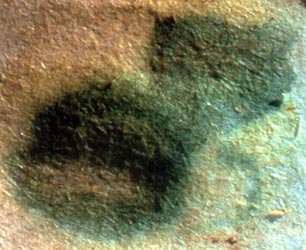
H2SO4 conc. - negative on pileus surface.
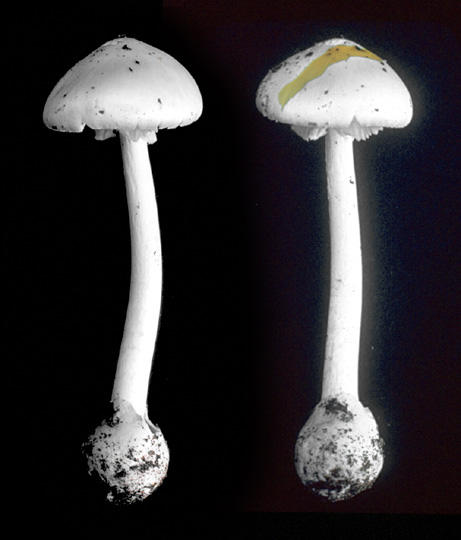
KOH soln. (5-10%) - quickly bright yellow on pileus surface.
Test vouchers: Halling 7751; Tulloss 7-30-89-H, 7-20-89-P, 7-10-90-B, 8-21-92-B, 8-4-12-U, 8-9-14-H; Vincent 5444. |
| lamella trama |
bilateral, divergent; ... |
| subhymenium |
pseudoparenchymatous (cellular). |
| basidia |
31 - 35 × 8.8 - 9.8 μm, in most cases dominantly (always more than 40%) 2-sterigmate, occasionally 1- or 3- sterigmate, never more tha 50% 4-sterigmate, with sterigmata up to 6.0 × 1.5 μm. |
| stipe context |
longitudinally acrophysalidic; ... |
| lamella edge tissue |
sterile. |
| basidiospores |
composite of data from all material revised by RET: [412/18/16] (4.9-) 7.2 - 9.9 (-11.2) × (4.2-) 6.4 - 8.8 (-10.0) µm, (L = (7.8-) 7.9 - 9.2 (-9.6) µm; L’ = 8.4 µm; W = (7.0-) 7.1 - 8.1 (-8.2) µm; W’ = 7.5 µm; Q = (1.0-) 1.02 - 1.25 (-1.70); Q = (1.05-) 1.06 - 1.19 (-1.20); Q’ = 1.12), smooth, thin-walled, hyaline, colorless, amyloid to strongly amyloid, infrequently with small widely and irregularly spaced amyloid warts, globose to subglobose to broadly ellipsoid, occasionally ellipsoid, rarely elongate, often somewhat adaxially flattened, sometimes slightly expanded at one end; apiculus sublateral, truncate-conic to cylindric; contents granular to guttulate; white in deposit. |
| ecology |
Solitary to gregarious.
Florida: In "high hammock"
[a relatively limited elevated forested area in the
midst of lower, rather wet forest of different
composition].
Missouri: At the edge of Quercus-Carya
dominated forest.
New Jersey: In typical Pinus-Quercus
barrens of the sandy coastal plain with Acer
rubrum, Nyssa sylvatica, P. rigida,
Q. alba, Q. marilandica, other
Q. spp. with understory including plentiful
Vaccinium spp. North Carolina: In dark
loam with Acer sp., Ostrya
virginiana, and Rhododendron sp. or in
leaf mold in woods or in open Castanea
dentata woods. |
| material examined |
from Jenkins' (1978a)
type study of A. phalloides var.
striatula:
U. S. A.:
NEW YORK— Warren Co. - Bolton, s.d. C.
H. Peck s.n. (holotype of A. phalloides var.
striatula, NYS).
from type study of A. vernella by Jenkins
(1979):
U. S. A.: FLORIDA— Alachua Co. - Gainesville,
4.x.1943 W. A. Murrill F 20002 (holotype,
FLAS).
RET: CANADA:
ONTARIO—Norfolk Co. - Port Dover
[42.7863° N/ 80.198° W, 182 m], 3.viii.2014 E.
Skific s.n. [mushroomobserver #172313]
(RET 639-1, nrITS seq'd.), 23.vii.2014 E. Skific s.n.
[mushroomobserver #171045]
(RET 632-7, nrITS & nrLSU seq'd.).
COSTA RICA:
GUANACASTE—ca. Liberia
[10°45'53" N/ 85°18'12" W, 750 m], 26.vi.1997 R. E.
Halling 7751 (NY).
MEXICO:
TLAXCALA—Mpio Panotla - 1 km E of
San Francisco Temezontla [2600 m], 29.vii.1994 Adriana
Montoya Esquivel, Alejandro Kong Luz, & R. E.
Tulloss
8-20-94-L (RET 134-2, nrITS-LSU seq'd.; TLXM),
8-29-94-M (RET 135-5, nrITS seq'd.; TLXM),
8-29-94-N (RET 134-1, nrITS seq'd.; TLXM),
8-29-94-O (RET 134-6, nrITS seq'd.).
U.S.A.:
ARIZONA—Cochise Co. - CMP site #27,
21.viii.1992 W. J. Sundberg s.n. [CMP1347 ; Tulloss
8-21-92-B] (LAM; RET). Graham Co. - Pinallones
Mtns., Mt. Graham, 7.ix.1986 J. S. States AEF438
(MICH).
FLORIDA—Alachua Co. -
Gainesville, 4.x.1943 W. A. Murrill s.n. (holotype of
V. vernellus, FLAS F20002).
MAINE—Cumberland Co. - Freeport, Hedgehog
Mtn., 9.viii.2014 Greg Marley s.n. [Tulloss 8-9-14-H]
(RET 628-6, nrITS seq'd.).
MICHIGAN—Emmet Co. - Bay View,
22.viii.1905 C. H. Kauffman s.n. [G. F. Atkinson
19707] (CUP-A).
MISSOURI—Lincoln Co. - Cuivre River
St. Pk. [38.03° N/ 90.93° W, 330 m], 28.vi.2014 P.
Harvey s.n. [mushroomobserver #168644]
(RET 642-6, nrLSU seq'd.).
NEW JERSEY—Burlington
Co. - ca. Chatsworth, Franklin Parker Preserve,
12.x.2009 John Burghardt, Felipe Wartchow, R. E.
Tulloss [Tulloss 10-12-09-F] (RET 450-6);
Wharton St. For., 21.vii.1985 Joe Kuczinski s.n.
[Tulloss 7-21-85-B] (RET 204-3).
Gloucester Co. - Newfield, s.d. J. B. Ellis
930 (FH as “Agaricus (Amanita)
crescendus ined.”).
Hunterdon Co. - East Amwell, Sourland Mountains,
Rileyville Road,
9.vii.2014 Nina Burghardt s.n. [Tulloss 7-9-14-A]
(RET 628-4).
Middlesex Co. -
Jamesburg Twp., Jamesburg Twp. Pk., ca. Helmetta
[40°23’07” N/ 74°25’48” W], 21.ix.1986 R. E.
Tulloss 9-21-86-B (RET 468-2), 28.ix.1986 D. C.
& R. E. Tulloss 9-28-86-A (RET 467-6),
12.ix.1993 M. A. King, S. E. King Tulloss &
R. E. Tulloss 9-12-93-C (RET 104-2), -F
(RET 104-3).
Morris Co. - Mendham, Meadowoods Mun. Pk.,
30.vii.1989 D. C. Tulloss s.n. [Tulloss 7-30-89-H]
(RET 247-5), Roger Phillips s.n. [Tulloss
7-30-89-P] (RET 247-6).
Ocean Co. - Waretown, Hogenbirk prop.
[39°47’12” N/ 74°11’50” W], 9.ix.1993 Cornelius
Hogenbirk s.n. (RET 104-6).
NEW YORK—Franklin Co.
- ca. Paul Smith's, Barnum Brook/Boreal Life Tr.
[44°26’57” N/ 74°15’52” W, 504 m], 12.viii.2011 Jean
Hopkins s.n. [Tulloss 8-12-11-I] (RET 480-1).
Oneida Co. - unkn. loc. 28.viii.2010 Eric Smith
s.n. [www.mushroomoberver.org
#51543]
(RET 481-5). Putnam Co. - Franklin D.
Roosevelt St. Pk., 31.vii.1992 R. E. Halling
6880 (NY). Sussex Co. (Long Isl.) - ca. Port
Jefferson, 26.viii-2.ix.1904 G. F. Atkinson 20302
(CUP-A). Tompkins Co. - Ithaca, Coy Glen,
23.vii.1917 Leva B. Walker (NEB 30569 as “A.
phalloides - white form”); Ithaca, Six Mile Crk.,
ix.1901 C. M. VanHook s.n. [Atkinson 8122] (syntype,
CUP-A), 11.viii.1904 C. H.
Kauffman s.n. [Atkinson 18504] (proposed lectotype,
CUP-A). Warren Co. -
Bolton, August C. H. Peck s.n.
(holotype of Amanita phalloides var.
striatula, NYS).
NORTH CAROLINA—Macon Co. - ca. Otto,
Coweeta Hydrological Stn., 10.vii.1990 R. E.
Tulloss 7-10-90-B (RET 025-2).
Wake Co. – Raleigh, Umstead State park, 20.vi.2019 s.n. [mushroomobserver
#370162]
(RET 909-7, nrITS seq'd.) ).
Watauga Co. -
Blowing Rock, 19.viii.-19.ix.1899 G. F. Atkinson
3704 (CUP-A). Watauga or Caldwell Co. -
19.viii.-22.ix.1901 G. F. Atkinson 10324
(CUP-A).
OHIO—Butler Co. - Oxford Twp., Hueston
Woods St. Pk., High Banks, 3.vii.1992 Mary W. &
M. A. Vincent 5444 (F n.v.; MU; RET; XAL
n.v.).
PENNSYLVANIA—Clinton Co. - Zindel Park, 3.viii.2019 J. Wheeler s.n. [Tulloss 8-3-19-B] (RET 871-4).
[Tulloss 8-3-19-B] (RET 874-1).
—Luzerne Co. - Moon Lake Pk.
[41.2530° N/ 76.0470° W, 240-400 m], 13.vii.2014
David Wasiliewski s.n. [mushroomobserver
#170330]
(RET 643-5, nrITS & nrLSU seq'd.), 11.ix.2011 D.
Wasilewski s.n. [mushroomobserver
#76153]
(RET 556-9).
Northampton Co. -
Jacobsburg St. Pk., Henry's Wood Tr. & Blue Tr.
[40.78277° N/ 75.29265° W, 135 m], 4.viii.2012 A.
Pool s.n. [RET 8-4-12-U] (RET 505-7, nrITS
seq'd.).
TENNESSEE—Sevier Co. - GSMNP, Old
Settler's Tr., 11.vii.2006 E. Lickey s.n.
[TRB 13269] (TENN); GSMNP, ca. Gatlinburg,
Cherokee Orchard [35.6811° N/ 83.4625° W, 945 m],
12.vii.2004 mycoblitz crew s.n.
[Tulloss 7-12-04-E] (HKAS 77811, nrITS &
nrLSU seq'd.; RET 377-9). Wilson Co. - Cedars of Lebanon St.
Pk., 29.vi.1981 R. E. Tulloss 6-29-81-A1
(RET 170-9), 6-29-81-A3 (RET 115-3), 6-29-81-AZ
(RET 114-4), 30.vi.1981 R. E. Tulloss 6-30-81-C
(RET 170-8).
VERMONT—Bennington Co. - ca. Bennington,
Bennington Fish Culture Stn. [42°51'10" N/ 73°10'12"
W, 288 m], 24.viii.1980 Mary A. King & R. E.
Tulloss 8-24-80-J (RET 392-10).
VIRGINIA—Bath Co. - Hot Springs,
23.viii.1918, G. F. Atkinson 25476 [H31-1]
(CUP-A). Giles Co. - Salt
Pond Mtn., War Spur Ridge, 4.x.1975 S. L.
Stephenson 67 (FWVA n.v.). Page Co. -
Skyline Drive, S of Big Meadows, 23.viii.1989 E. H.
Varney s.n. [Tulloss 8-23-89-EHV] (RET 239-2).
WEST VIRGINIA—Greenbrier Co. - Greenbrier St. For.,
28.viii.1977 S. L. Stephenson 216
(FWVA n.v.). Pocahontas Co. -
Monongahela Nat. For., Droop Mtn., 26.viii.1977 K.
H. McKnight s.n. (BPI 14709). Roane Co. -
unkn. loc., 20.ix.2001 Bill Roody s.n. (in herb.
Roody). Tucker Co. - Fernow Exp. For.
4.ix.1992 S. L. Stephenson, R. P. Bhatt & A.
Kumar WS13-114 (FWVA).
[Consider Honduran, and
Colombian collections.] |
| discussion |
(t.b.d.)
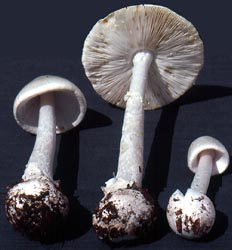
The above list of collections is likely to be a mixture of collections of five or more probably distinct taxa. Only one of these taxa has plentiful 2-sterigmate basidia on its lamellae—this is the true A. bisporigera. In general, as observed to RET once by Dr. Alexander Smith, the latter species produces basidiomes that are smaller and more gracile than those of other "white destroying angels" of North America.
Genetics studies (e.g., by Heather Hallen (pers. comm.), Cai et al. (2014), and unpublished results of contributors to this site) show that at least five, North American taxa have been sometimes treated as A. bisporigera in both field and laboratory identifications in recent years. These taxa can be segregated into four categories:
(1) A 2-sterigmate species—A. bisporigera
(2) A species with 4-sterigmate basidia and broadly
ellipsoid spores—A. suballiacea
(3) Two robust taxa with 4-sterigmate basidia and
globose to subglobose spores: A.
amerivirosa and A. sturgeonii.
(4) A rather small species with 4-sterigmate
basidia—A.
helmettensis.
Sporograph comparisons for this group of taxa
follow. Note that as this page is corrected,
figures that follow will change. The
comparisons were first provided 11 September
2014.
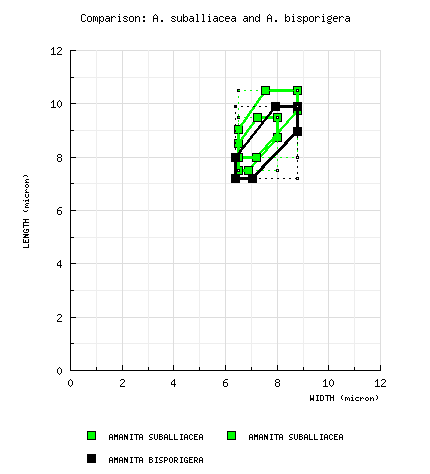
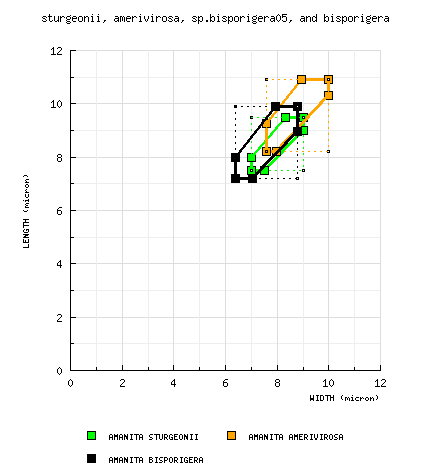
Additional comparisons of sporographs for white taxa of sect. Phalloideae having a yellow reaction to spot testing with KOH can be found on the technical tabs of the taxon pages for A. exitialis and A. subjunquillea var. alba.
Because the results of the following spore measurements imply the spores of A. bisporigera (1) are improbably spherical and (2) do not match more current measurements of spores made using the same (type) materials, the following sets of spore measurements are not included above with the data that generates sporographs representing the present taxon.
from type study of A. phalloides var. striatula by Jenkins (1978a): [-/-/1]
7.8 - 10.2 × 7.0 - 10.2 μm, (Q = 1.0 - 1.10; Q' = 1.04),
hyaline, thin-walled, amyloid, globose to subglobose; apiculus sublateral, cylindric; contents guttulate;
color in deposit not recorded.
from type study of A. vernella by Jenkins (1979): [-/-/1] 7.0 - 7.8 (-9.7) × 7.0 - 7.8 (-9.4) μm, (Q = 1.0 - 1.03; Q' = 1.01),
hyaline, thin-walled, amyloid, globose; apiculus sublateral, cylindric; contents guttulate;
color in deposit not recorded.
Tulloss 8-6-11-C is immature.
Definitely excluded collections:
U.S.A.:
NEW JERSEY—Burlington Co. - Wharton St.
For., 21.vii.1985 Joe Kuczinski s.n.
[Tulloss 7-21-85-A] (RET 202-6). Middlesex Co. -
Cheesequake St. Pk. [40°26'32" N/ 74°16'10" W, 0-13 m],
10.ix.1989 NJMA foray participant
s.n. [Tulloss 9-10-89-NJMA2] (RET 238-10);
Jamesburg Twp., Jamesburg Twp. Pk., ca. Helmetta
[40°23’07” N/ 74°25’48” W], 28.ix.1985 David C. &
R. E. Tulloss 9-28-85-A (RET 101-6), -E (RET 100-2),
30.viii.1987 D. C. & R. E. Tulloss 8-30-87-G (RET
018-2), -K (RET 018-1).
TEXAS—Hardin Co. - Big Thicket Nat. Preserve,
Lance Rosier Unit, 25.x.1986 Newt Foster s.n.
[Tulloss 10-25-86-J] (RET 467-1).
The above collections have 4-sterigmate basidia
dominant. The spore measurements suggest A.
suballiacea, and should be done over.
Collections probably to be excluded:
??
|
| citations |
—R. E. Tulloss |
| editors |
RET |
|




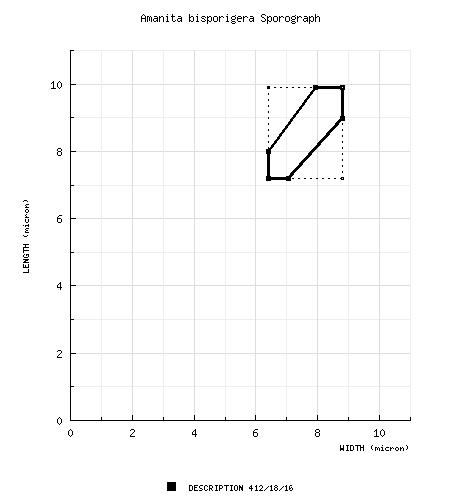
 Spore data sets and their composite