

| name | Amanita pallidoflavescens |
| name status | nomen acceptum |
| author | Dav. T. Jenkins |
| cap |
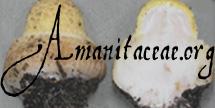
The cap of A. pallidoflavescens is up to 35 mm wide, plano-convex to plane to slightly depressed at the center, slightly appendiculate, white to silvery white, glabrous, with a nonstriate margin. The volva is present as a thick, irregularly disposed, floccose-pulverulent layer, brownish-gray, thinning to absent on the margin. |
| gills |
The gills are adnexed to just free, close, fragile, and cream with pale pinkish tint. The short gills are numerous and attenuate. |
| stem |
The stem is up to 40 × 8 mm, tapering slightly downward, solid, white to cream, glabrous, with irregularly distributed, brownish-gray, pulverulent volval remnants on the lower stem and the narrowly fusiform bulb. |
| spores |
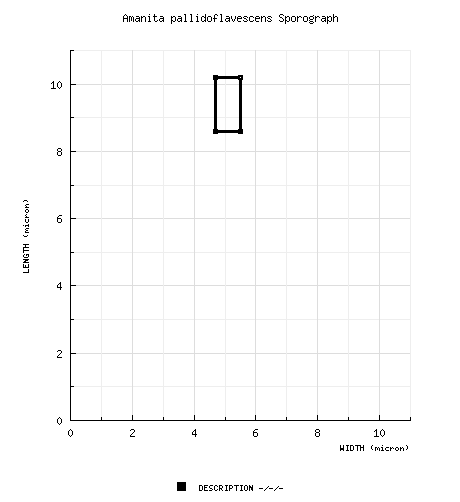
The spores measure 8.6 - 10.2 × 4.7 - 5.5 µm and are amyloid and ellipsoid to elongate to cylindric. Clamps are absent at bases of basidia. |
| discussion |
This species is known only from mixed (conifer and deciduous) forest in North Carolina, U.S.A. Amanita pallidoflavescens is strikingly similar to A. cinereoconia G. F. Atk. and could possibly be based on a "parasitized" specimen of the latter species. Note that, in the original description of the present species, Jenkins (1980) placed the present species in Bas' stirps Cinereoconia.—R. E. Tulloss |
| brief editors | RET |
| name | Amanita pallidoflavescens | ||||||||||||||||||||
| author | Dav. T. Jenkins. 1980. Mycotaxon 10: 296, fig. 1. | ||||||||||||||||||||
| name status | nomen acceptum | ||||||||||||||||||||
| MycoBank nos. | 118373 | ||||||||||||||||||||
| GenBank nos. |
Due to delays in data processing at GenBank, some accession numbers may lead to unreleased (pending) pages.
These pages will eventually be made live, so try again later. Search:
Showing 0 to 0 of 0 entries | ||||||||||||||||||||
| holotypes | in herb. Dr. David T. Jenkins, Univ. of Alabama, Birmingham | ||||||||||||||||||||
| intro |
The following text may make multiple use of each data field. The field may contain magenta text presenting data from a type study and/or revision of other original material cited in the protolog of the present taxon. Macroscopic descriptions in magenta are a combination of data from the protolog and additional observations made on the exiccata during revision of the cited original material. The same field may also contain black text, which is data from a revision of the present taxon (including non-type material and/or material not cited in the protolog). Paragraphs of black text will be labeled if further subdivision of this text is appropriate. Olive text indicates a specimen that has not been thoroughly examined (for example, for microscopic details) and marks other places in the text where data is missing or uncertain. The following description is derived entirely from the protolog of the present species (Jenkins 1980). | ||||||||||||||||||||
| basidiospores | Jenkins (1980): [-/-/-] 8.6 - 10.2 × 4.7 - 5.5 μm, (Q = 1.56 - 2.17; Q = 1.76), hyaline, thin-walled, amyloid, ellipsoid to cylindric; apiculus sublateral, short cylindric; contents guttulate; color in deposit not recorded. | ||||||||||||||||||||
| ecology | Jenkins (1980): "Terrestrial, mixed coniferous and deciduous forest, stream bank." | ||||||||||||||||||||
| material examined | Jenkins (1980): U.S.A.: ALABAMA—Jefferson Co. - Birmingham, Homewood Pk., 24.vii.1976 Wayne Harbin 1216 (holotype, in herb. Dav. T. Jenkins, Univ. Alabama, Birmingham), 10.vi.1979 D. T. Jenkins 1496 (paratype, in herb. Dav. T. Jenkins, Univ. Alabama, Birmingham). | ||||||||||||||||||||
| discussion |
In the protolog of A. pallidoflavescens, Jenkins begins his discussion of novelty by proposing placement of the species in Bas' stirps Cinereoconia, which appears appropriate to us. He then continues,
"It ... shares certain specific characters of other members of this stirps, viz., a yellowish staining reaction of the flesh, similar to that in A. cinereoconia var. croceescens and A. lutescens; a spore size similar to A. cinereoconia var. croceescens, A. lutescens, and A. odorata; and an irregular orientation of volval elements similar to A. lutescens, A. griseoconia, and A. vestita. The uniqueness of this organism results from a combination of the above characters with a white to silvery white pileus, cream colored gills with a faint pinkish tint, and basidia that are mostly 1- and 2-sterigmate."In the thirty years following the original publication of the present species, it has been fortunate that more data has become available for some of the other species of stirps Cinereoconia. A look at the spore data (see sporographs, below) for the species Jenkins lists as having similar spores indicates that many of them have spores that can be readily distinguished from the present species by size and shape.nbsp; The best match is with A. cinereoconia; indeed, the match is consistent with what one could find if the data came from two sets of collections of a single taxon. Since, as discussed on this site's taxon page for A. cinereoconia, RET has collected a non-yellowing speciment of A. cinereoconia that later began to show yellow where bruised during collecting and when cut, and, moreover, had spores typical of var. cinereoconia, the hypothesis that var. croceescens was based on specimens of A. cinereoconia exhibiting the yellowing syndrome needs to be considered. In RET's experience with specimens of A. subolitaria exhibiting the yellowing syndrome, he has found that a collecting site producing yellowing specimens at a single spot will also produce yellowing specimens in spots over 100 m distant from the original collecting spot and will consistently produce a few yellowing specimens year after year for decades while also producing normal fruiting bodies. Hence, Jenkins' having collected the two original collections of A. pallidoflavescens at the same spot in different years is not inconsistent with the hypothesis that these collections were exhibiting the yellowing syndrome. The mention of 1- and 2-sterigmate basidia in the original material of A. pallidoflavescens suggests either a response to "infection" or a developmental stage that is seen in many amanitas prior to the full maturity of the basidiome. If A. pallidoflavescens were based on specimens of A. cinereoconia with common 1- and 2-sterigmate basidia, then one might expect to find spores with twice to four times the volume of spores found in a "normal specimen" of A. cinereoconia. ??more?? | ||||||||||||||||||||
| citations | —R. E. Tulloss | ||||||||||||||||||||
| editors | RET | ||||||||||||||||||||
Information to support the viewer in reading the content of "technical" tabs can be found here.
| name | Amanita pallidoflavescens |
| bottom links |
[ Section Lepidella page. ] [ Amanita Studies home. ] [ Keys & Checklists ] |
| name | Amanita pallidoflavescens |
| bottom links |
[ Section Lepidella page. ] [ Amanita Studies home. ] [ Keys & Checklists ] |
 Spore data sets and their composite
Each spore data set is intended to comprise a set of measurements from a single specimen made by a single observer; and explanations prepared for this site talk about specimen-observer pairs associated with each data set. Combining more data into a single data set is non-optimal because it obscures observer differences (which may be valuable for instructional purposes, for example) and may obscure instances in which a single collection inadvertently contains a mixture of taxa.

Text and User-Generated Sporographs are published under the Creative Commons License.

In the case of a taxon page, image credits are on the 'image' tab.