
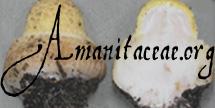

| name | Amanita microspora |
| name status | nomen acceptum |
| author | O. K. Mill. |
| english name | "Horak's Coccoloba Amanita" |
| intro | The following is based on the original description (2000). |
| cap | The cap of Amanita microspora is 30 - 50 mm wide, convex, becoming slightly depressed in age, pure white at first, soon pale yellow to ochre over the center, with a broad, white, striate margin. The cap is viscid when moist with white patches, and the floccose remnants of the volva, unevenly scattered over the center, either easily lost or becoming glued to the surface. The flesh is firm and white. |
| gills | Gills are free, ventricose, subdistant, white at first, soon becoming pale ochre. The short gills are infrequent. |
| stem | The stem is 35 - 60 × 3 - 5 mm, equal, white, dry, with a fine granular surface and light yellowish tinted belts at about its midpoint. with an abrupt ovoid basal bulb. The bulb is up to 15 mm wide at the base. The volva remains on the lower stem and top of the bulb are white squamules. A ring is lacking. The flesh is firm and white. |
| spores | The spores measure 5 - 7 × 4.5 - 6.7 µm and is subglobose to broadly ellipsoid and inamyloid. Clamps are absent at bases of basidia. |
| discussion | This species occurs on sandy soil in coastal dunes with Coccoloba uvifera. In recent years, a growing number of Amanita species have been collected in association with Coccoloba; among them are Amanita dunicola Guzmán and A. arenicola O. K. Mill & D. J. Lodge. Additional (probably undescribed) taxa seemingly associated with Coccoloba are currently being revised from countries in or around the Caribbean. The present species was originally described from Puerto Rico.—R. E. Tulloss and L. Possiel |
| brief editors | RET |
| name | Amanita microspora | ||||||||||||||||||||
| author | O. K. Mill. in Miller et al. 2000. Mycologia 92: 562, figs. 12-14. | ||||||||||||||||||||
| name status | nomen acceptum | ||||||||||||||||||||
| english name | "Horak's Coccoloba Amanita" | ||||||||||||||||||||
| MycoBank nos. | 467422 | ||||||||||||||||||||
| GenBank nos. |
Due to delays in data processing at GenBank, some accession numbers may lead to unreleased (pending) pages.
These pages will eventually be made live, so try again later. Search:
Showing 0 to 0 of 0 entries | ||||||||||||||||||||
| holotypes | CFMR; isotype, UPRRP | ||||||||||||||||||||
| intro |
The following text may make multiple use of each data field. The field may contain magenta text presenting data from a type study and/or revision of other original material cited in the protolog of the present taxon. Macroscopic descriptions in magenta are a combination of data from the protolog and additional observations made on the exiccata during revision of the cited original material. The same field may also contain black text, which is data from a revision of the present taxon (including non-type material and/or material not cited in the protolog). Paragraphs of black text will be labeled if further subdivision of this text is appropriate. Olive text indicates a specimen that has not been thoroughly examined (for example, for microscopic details) and marks other places in the text where data is missing or uncertain. The following material is derived from the protolog of the present species. | ||||||||||||||||||||
| pileus | from protolog: 30 - 50 mm wide, convex becoming slightly depressed in age, pure white at first, soon pale yellow to ochre over disc with broad white margin, viscid when moist; context not described; margin striate; universal veil as detersile, agglutinated, white patches or other floccose remains unevenly scattered over surface. | ||||||||||||||||||||
| lamellae | from protolog: free, subdistant, white at first soon becoming pale ochre in age, ventricose; lamellulae short, infrequent. | ||||||||||||||||||||
| stipe | from protolog: 35 - 60 × 3 - 5 mm, white, cylindric, dry; bulb abrupt, ovoid up to 15 mm wide; context firm, white; exannulate; universal veil as fine granules on stipe surface and light yellowish-tinted belts around mid-stipe, as coarse white squamules just above and on basal bulb. | ||||||||||||||||||||
| odor/taste | Odor and taste not distinctive. | ||||||||||||||||||||
| macrochemical tests |
none recorded. | ||||||||||||||||||||
| pileipellis | from protolog: filamentous hyphae 4.2 - 13 μm wide, thin-walled, hyaline to light yellowish in 3% KOH, loosely arranged. | ||||||||||||||||||||
| pileus context | from protolog: filamentous hyphae 4.2 - 13 μm wide, thin-walled, hyaline, interwoven. | ||||||||||||||||||||
| lamella trama | from protolog: [Bilateral,] divergent; filamentous hyphae 4.2 - 13 μm wide, thin-walled, hyaline to light yellowish in 3% KOH and Melzer’s reagent; clamps “absent.” | ||||||||||||||||||||
| subhymenium | not described. | ||||||||||||||||||||
| basidia | from protolog: 18 - 29 × 6 - 9.5 μm diam, 4-sterigmate; clamps “absent.” | ||||||||||||||||||||
| universal veil | from protolog: filamentous hyphae 2 - 10 μm wide; inflated cells “about 30%,” ovoid to pyriform to clavate, 30 – 71 × 15 - 32 μm, thin-walled, hyaline; clamps “absent.” | ||||||||||||||||||||
| stipe context | not described. | ||||||||||||||||||||
| partial veil | absent. | ||||||||||||||||||||
| lamella edge tissue | from protolog: not seen. [Incorrectly called “cheilocystidia” by Miller in the protolog.—RET] | ||||||||||||||||||||
| basidiospores | from protolog: [-/-/-] 5.0 - 7.0 × 4.5 - 6.7 μm, (Q = 1.0 - 1.34; Q' = 1.12), hyaline, thin-walled, inamyloid, globose to subglobose to broadly ellipsoid to ellipsoid; apiculus not recorded; contents not recorded; color in deposit not recorded. | ||||||||||||||||||||
| ecology | from protolog: On sandy soil in coastal sand dunes with Coccoloba uvifera. | ||||||||||||||||||||
| material examined | from protolog: U.S.A.: PUERTO RICO—Mpio. Río Grande - Piñones Commonwealth For., beach ca. Luiza, 19.xi.1996 E. Horak ZT-6125 (holotype, CFMR; isotype, UPRRP). | ||||||||||||||||||||
| discussion |
The description of the pileus as viscid when moist
suggests that the pileipellis gelatinizes and that,
as a consequence, the species might may not be
assignable to the provisional subsect.
Amanitella. The form of the volval
remains at the stipe base would prohibit placement of
the species in the provisional subsections
Gemmatae, Pantherinae, and
Rubrotincta. The type of the present taxon should be revised and described in accord with modern methods. | ||||||||||||||||||||
| citations | —R. E. Tulloss | ||||||||||||||||||||
| editors | RET | ||||||||||||||||||||
Information to support the viewer in reading the content of "technical" tabs can be found here.
 Spore data sets and their composite
Each spore data set is intended to comprise a set of measurements from a single specimen made by a single observer; and explanations prepared for this site talk about specimen-observer pairs associated with each data set. Combining more data into a single data set is non-optimal because it obscures observer differences (which may be valuable for instructional purposes, for example) and may obscure instances in which a single collection inadvertently contains a mixture of taxa.
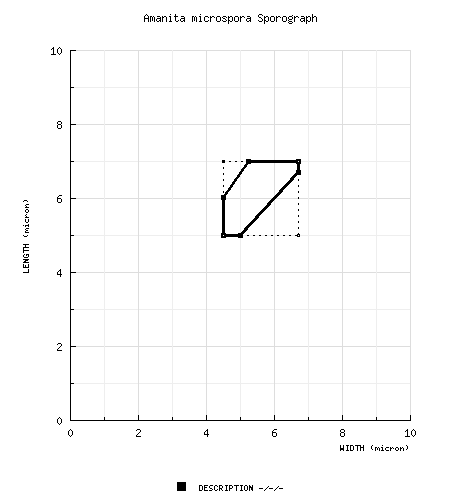

Text and User-Generated Sporographs are published under the Creative Commons License.

In the case of a taxon page, image credits are on the 'image' tab.