
| name | Amanita arenicola | ||||||||||||||||||||||||||||||||||||||||||||||||||||||||||||||||||||||||||||||||||||
| author | O. K. Mill. & Lodge in O. K. Mill., Lodge & T. J. Baroni. 2000. Mycologia 92: 560, figs. 5-8. | ||||||||||||||||||||||||||||||||||||||||||||||||||||||||||||||||||||||||||||||||||||
| name status | nomen acceptum | ||||||||||||||||||||||||||||||||||||||||||||||||||||||||||||||||||||||||||||||||||||
| english name | Beach-loving Ringless Amanita | ||||||||||||||||||||||||||||||||||||||||||||||||||||||||||||||||||||||||||||||||||||
| etymology | arena "sand" + -cola "dwelling in" or "dweller" | ||||||||||||||||||||||||||||||||||||||||||||||||||||||||||||||||||||||||||||||||||||
| MycoBank nos. | 467421 | ||||||||||||||||||||||||||||||||||||||||||||||||||||||||||||||||||||||||||||||||||||
| GenBank nos. |
Due to delays in data processing at GenBank, some accession numbers may lead to unreleased (pending) pages.
These pages will eventually be made live, so try again later. Search:
Showing 1 to 17 of 17 entries | ||||||||||||||||||||||||||||||||||||||||||||||||||||||||||||||||||||||||||||||||||||
| holotypes | NY 0560911; isotype, CFMR | ||||||||||||||||||||||||||||||||||||||||||||||||||||||||||||||||||||||||||||||||||||
| type studies | Tulloss, herein. | ||||||||||||||||||||||||||||||||||||||||||||||||||||||||||||||||||||||||||||||||||||
| intro |
The following text may make multiple use of each
data field. The field may contain magenta text presenting data from a type study and/or revision of other original material cited in the protolog of the present taxon. Macroscopic descriptions in magenta are a combination of data from the protolog and additional observations made on the exiccata during revision of the cited original material. The same field may also contain black text, which is data from a revision of the present taxon (including non-type material and/or material not cited in the protolog). Paragraphs of black text will be labeled if further subdivision of this text is appropriate. Olive text indicates a specimen that has not been thoroughly examined (for example, for microscopic details) and marks other places in the text where data is missing or uncertain. The following material is derived from the protolog of the present species and from original research of R. E. Tulloss. With regard to RET's study of the original material, the macroscopic description is based on original field notes of only those specimens listed as revised by RET in the material examined data field (below) as revised. To this information is added such data as made be derived from examination under a dissecting scope. | ||||||||||||||||||||||||||||||||||||||||||||||||||||||||||||||||||||||||||||||||||||
| pileus |
protolog: 35 - 55 mm wide,
strongly depressed to infundibuliform, moist to
sticky, sand covered, smooth, Drab Gray;
context not described; margin evenly
Pale Drab Gray (10YR 8.5/0.5) and plicate-striate;
universal veil as flat, pale buff
(0.9Y 7.77/5.5) detersile patches.
[Note: The Munsell color code for Ridgway's Pale Drab
Gray was replaced by an extended typographical error
in the protolog. The erroneous text has been
replaced
with the Munsell equivalent for Pale Drab Gray as
proposed in (Hamly 1949).—RET]. type study of RET: 13 - 27 mm wide, Drab Gray to Light Drab Gray, convex to planar, slightly to moderately depressed in center; context not recorded; margin plicate striate; universal veil as Chamois to Yellow Ochre, small, flat patches over disc. | ||||||||||||||||||||||||||||||||||||||||||||||||||||||||||||||||||||||||||||||||||||
| lamellae |
protolog: free, close, white, 5 mm broad, with even edges; lamellulae in single tier. type study of RET: barely free, 1 - 2 per mm, white, 3 - 4 mm broad, with edge even and concolorous, with some forking near stipe; lamellulae in 1 - 2 ranks. | ||||||||||||||||||||||||||||||||||||||||||||||||||||||||||||||||||||||||||||||||||||
| stipe |
protolog: 95 - 100 × 5 - 10 mm wide, nearly cylindric with “narrowly clavate” base, smooth, moist, dull white; context soft, fragile, white; exannulate; universal veil as small, fragile, white saccate volva, often with cup-like basal portion appressed to stipe, but with one half or more of sac's height free, often with ragged remains of limb found in substrate or adhering in fragments to lower stipe. type study of RET: 35 - 58 × 3 - 7 mm, cylindric or tapering upward, white, smooth; context with stuffed central cylinder; exannulate; universal veil saccate, proportionately small, short, fragile. | ||||||||||||||||||||||||||||||||||||||||||||||||||||||||||||||||||||||||||||||||||||
| odor/taste | not recorded. | ||||||||||||||||||||||||||||||||||||||||||||||||||||||||||||||||||||||||||||||||||||
| macrochemical tests |
none recorded. | ||||||||||||||||||||||||||||||||||||||||||||||||||||||||||||||||||||||||||||||||||||
| pileipellis | protolog: filamentous hyphae 2.5 - 5.0 µm wide, thin-walled, hyaline in 3% KOH. | ||||||||||||||||||||||||||||||||||||||||||||||||||||||||||||||||||||||||||||||||||||
| peridium micro | double click in markup mode to edit. | ||||||||||||||||||||||||||||||||||||||||||||||||||||||||||||||||||||||||||||||||||||
| pileus context | protolog: filamentous hyphae (3.4 -) 6 - 25 µm wide, interwoven, broad, thin-walled, hyaline, sometimes [with] swollen [segments]. | ||||||||||||||||||||||||||||||||||||||||||||||||||||||||||||||||||||||||||||||||||||
| lamella trama | protolog: filamentous hyphae 4.2 - 21 µm wide, with some segments “broad and swollen,” thin-walled, hyaline. | ||||||||||||||||||||||||||||||||||||||||||||||||||||||||||||||||||||||||||||||||||||
| subhymenium | protolog: comprising small inflated cells, isodiametric, thin-walled, hyaline. | ||||||||||||||||||||||||||||||||||||||||||||||||||||||||||||||||||||||||||||||||||||
| basidia | protolog: 35 - 55 × 12 -14 µm, clavate, thin-walled, 4-sterigmate, hyaline; clamp connections absent. | ||||||||||||||||||||||||||||||||||||||||||||||||||||||||||||||||||||||||||||||||||||
| universal veil | protolog: filamentous hyaline hyphae intermixed with a nearly equal proportion of globose, subglobose to pyriform, hyaline, thin-walled cells. [Location(s) on the basidiome from which a sample or samples were taken in order to produce this unuseful description was/were not specified.—ed.] | ||||||||||||||||||||||||||||||||||||||||||||||||||||||||||||||||||||||||||||||||||||
| lamella edge tissue |
protolog: [including] pyriform
to subglobose or globose cells, 18 - 30 × 13 - 17 µm,
thin-walled, hyaline. [Note: Incorrectly
called “cheilocystidia” by Miller in the
protolog.—ed.] type study of RET: sterile. | ||||||||||||||||||||||||||||||||||||||||||||||||||||||||||||||||||||||||||||||||||||
| basidiospores |
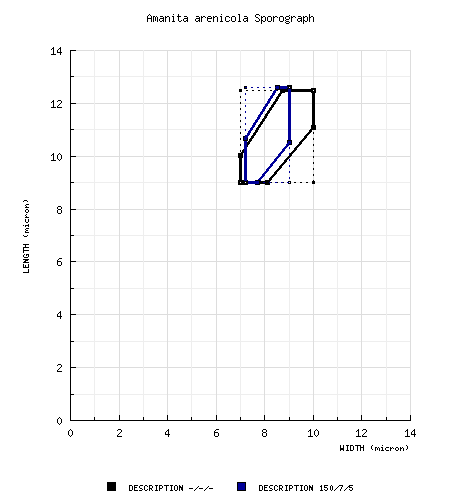
protolog: [-/-/-] 9.0 - 12.5 ×
7.0 - 10.0 μm, (Q = 1.11 - 1.43; Q' = 1.25),
hyaline, thin-walled, inamyloid, subglobose to
broadly ellipsoid to ellipsoid; apiculus not
described; contents as "large yellow oil body
in 3% KOH"; color in deposit not
recorded. RET and AW (composite): [150/7/5] (8.5-) 9.0 - 12.6 (-13.8) × (6.0-) 7.2 - 9.0 (-10.9) μm, (L = 10.2 - 11.5 μm; L' = 11.0 μm; W = 7.5 - 8.6 μm; W' = 8.2 μm; Q = (1.08-) 1.17 - 1.48 (-1.56); Q = 1.30 - 1.38; Q' = 1.33), hyaline, colorless, smooth, thin-walled, inamyloid, broadly ellipsoid to ellipsoid, infrequently subglobose, adaxially flattened; apiculus sublateral, cylindric; contents granular or monoguttulate; color in deposit not recorded. | ||||||||||||||||||||||||||||||||||||||||||||||||||||||||||||||||||||||||||||||||||||
| ecology |
protolog: At 1 m elev. "In sandy soil under Coccoloba uvifera usually on beaches...." "[F]ruiting in wet cool weather...." type study of RET: In sand, associated with C. uvifera and Pisonia subcorda. | ||||||||||||||||||||||||||||||||||||||||||||||||||||||||||||||||||||||||||||||||||||
| material examined |
protolog: BRITISH
VIRGIN ISLANDS: ANGUILLA—The
Mariners Hotel, 8.vii.1993 D. J. Lodge ANG-2
(paratype, CFMR).
GUANA ISLAND—White Bay, beach rd.
[18.4775° N/ 64.5781° W, 1m], 19.x.1997 D. J. Lodge
GUA-38 (paratype, VPI), 27.x.1997 D. J. Lodge
GUA-109 (holotype, NY 00560911; isotype, CFMR),
2.x.1998
D. J. Lodge & N. Clum GUA-179 (paratype, CFMR;
paratype, NY 00560908),
GUA-180 (paratype, CFMR; paratype, NY 00560902),
GUA-181 (paratype, NY 00560910), GUA-190 (paratype,
CFMR),
GUA-191 (paratype, NY 00560904), GUA-192 (paratype,
CFMR; paratype, NY 00560907), GUA-193 (paratype,
NY 00560905), GUA-194 (paratype, CFMR), GUA-195
(paratype, CFMR),
GUA-196 (paratype, CFMR), GUA-197 (paratype, CFMR),
5.x.1998 D. J. Lodge & N. Clum GUA-198
(paratype, NY 00560906; paratype, CFMR),
GUA-199
(paratype, CFMR; paratype, NY 00560903); North Bay, woods
near beach, 6.x.1998 J. D. Lodge GUA-215
(paratype, K).
U.S.A.: PUERTO
RICO—Mpio. Fajardo - ca. Luqillo, La Selva
Beach aka Governor's Beach, 21.xii.1997 L.
Barley & E. Garcia PR-4716 (paratype, VPI),
21.vii.1998 D. J. Lodge & N. Perez PR-4908
(paratype, CFMR), D. J. Lodge & N. Perez
PR-4909 (paratype, CFMR). Mpio. Río Grande -
Piñones Commonwealth For., beach ca. Luiza,
23.xii.1997 J. Trappe, D. J. Lodge, M. Castellano
PR-4717 (paratype, UPRRP). type study of RET and AW: BRITISH VIRGIN ISLANDS: GUANA ISLAND—White Bay, beach rd. [18.4775° N/ 64.5781° W, 1m], 27.x.1997 D. J. Lodge GUA-109 (holotype, NY 00560911, isotype in CFMR). | ||||||||||||||||||||||||||||||||||||||||||||||||||||||||||||||||||||||||||||||||||||
| discussion |
The following figure provides sporograph comparison
between the present taxa and another species of
Amanita sect. Vaginatae that occurs on
beaches with Coccoloba
species—Amanita
dunicola. A partial nrITS sequence was derived from NY 00560903; however, it was too short to be accepted by GenBank. | ||||||||||||||||||||||||||||||||||||||||||||||||||||||||||||||||||||||||||||||||||||
| citations | —R. E. Tulloss and A. Wu | ||||||||||||||||||||||||||||||||||||||||||||||||||||||||||||||||||||||||||||||||||||
| editors | RET | ||||||||||||||||||||||||||||||||||||||||||||||||||||||||||||||||||||||||||||||||||||
Information to support the viewer in reading the content of "technical" tabs can be found here.
| name | Amanita arenicola |
| bottom links | [ Keys & Checklists ] |
| name | Amanita arenicola |
| bottom links | [ Keys & Checklists ] |
 Spore data sets and their composite
Each spore data set is intended to comprise a set of measurements from a single specimen made by a single observer; and explanations prepared for this site talk about specimen-observer pairs associated with each data set. Combining more data into a single data set is non-optimal because it obscures observer differences (which may be valuable for instructional purposes, for example) and may obscure instances in which a single collection inadvertently contains a mixture of taxa.

Text and User-Generated Sporographs are published under the Creative Commons License.

In the case of a taxon page, image credits are on the 'image' tab.