
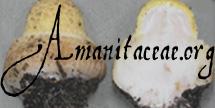

| name | Amanita maculans |
| name status | nomen acceptum |
| author | (Murrill) Murrill |
| english name | "Red Spotting Amanita" |
| images | |
| intro | Based on the original description of Murrill (1941), a type study by David T. Jenkins (1979), and the compendium of Jenkins (1986). |
| cap | The cap of Amanita maculans is up to 30 - 40 (-60) mm wide, convex to broadly convex, nearly smooth, white or lemon-tinted white, sometimes tannish on the center or in spots, with a slightly incurved, nonstriate margin. Volval remnants are present as a sparse, thin, floccose-membranous crust. The flesh is thin, white, and unchanging. |
| gills | The gills are narrow, adnate, crowded, white, and unchanging. |
| stem | The stem is up to 40 - 60 × 5 - 7 mm, cylindric, powdery at the top, smooth below the ring, solid, white, becoming reddish where bruised. The bulb is up to 15 mm wide and globose. The volva is short limbate or as small floccose-membranous volval remnants on the stem. The ring is ample like "a bell-shaped skirt," slightly staining reddish sometimes. |
| odor/taste | An odor is lacking. The taste is mild. |
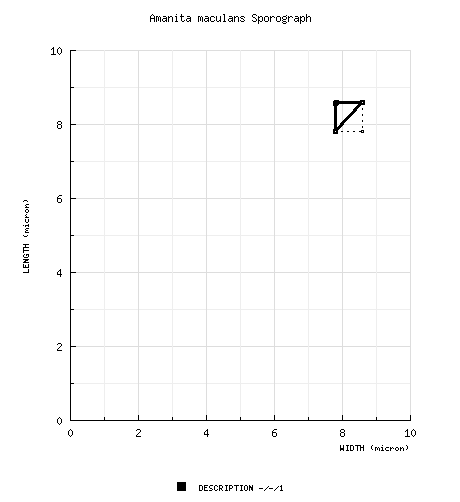
| spores | The spores measure 7.8 - 8.6 × 7.8 - 8.6 µm and are globose to subglobose and amyloid. Clamps are absent at bases of basidia. |
| discussion |
Originally described from Florida, USA under scrub
oaks, gregarious or scattered. Jenkins (1986), who has seen this species in Florida, classified it in section Phalloideae; however, at that time species such as A. brunnescens G.F. Atk. and A. mappa were thought to fall within the Phalloideae. Now they are generally agreed to be assigned to section Validae. The red spotting of the stem and annulus is an interesting character. RET would very much like to receive collections of well-dried and well-described material of this species.—R. E. Tulloss |
| brief editors | RET |
| name | Amanita maculans | ||||||||||||||||||||
| author | (Murrill) Murrill. 1945d ["1944"]. Lloydia 7(4): 327. | ||||||||||||||||||||
| name status | nomen acceptum | ||||||||||||||||||||
| english name | "Red Spotting Amanita" | ||||||||||||||||||||
| synonyms |
≡Venenarius maculans Murrill. 1945d ["1944"]. Lloydia 7(4): 314-315. The editors of this site owe a great debt to Dr. Cornelis Bas whose famous cigar box files of Amanita nomenclatural information gathered over three or more decades were made available to RET for computerization and make up the lion's share of the nomenclatural information presented on this site. | ||||||||||||||||||||
| MycoBank nos. | 284060, 291945 | ||||||||||||||||||||
| GenBank nos. |
Due to delays in data processing at GenBank, some accession numbers may lead to unreleased (pending) pages.
These pages will eventually be made live, so try again later. Search:
Showing 0 to 0 of 0 entries | ||||||||||||||||||||
| holotypes | FLAS | ||||||||||||||||||||
| type studies | Jenkins. 1979. Mycotaxon 10: 181. | ||||||||||||||||||||
| intro |
The following text may make multiple use of each data field. The field may contain magenta text presenting data from a type study and/or revision of other original material cited in the protolog of the present taxon. Macroscopic descriptions in magenta are a combination of data from the protolog and additional observations made on the exiccata during revision of the cited original material. The same field may also contain black text, which is data from a revision of the present taxon (including non-type material and/or material not cited in the protolog). Paragraphs of black text will be labeled if further subdivision of this text is appropriate. Olive text indicates a specimen that has not been thoroughly examined (for example, for microscopic details) and marks other places in the text where data is missing or uncertain. The following material not directly from the protolog of the present taxon and not cited as the work of another researcher is based on original research by R. E. Tulloss. Jenkins (1986): Basidiomes small. | ||||||||||||||||||||
| pileus |
type study of Jenkins
(1979):
up to 33 mm wide, white or
lemon-tinted, sometimes isabelline on disc or in spots,
convex to planoconvex, often broadly umbonate;
context not described;
margin slightly incurved, nonstriate;
universal veil sparse, as thin
"floccose-[sub?]membranous" crust. Jenkins (1986): 30 - 40 mm wide, white or lemon-tinted,occasionally with pinkish yellow tint on disc or in spots, convex to plano-convex to planar; margin glabrous, striate; context not described; universal veil usually absent, occasionally as floccose-[sub?]membanous crusts. | ||||||||||||||||||||
| lamellae |
type study of Jenkins
(1979):
free, crowded, white. Jenkins (1986): adnate to just free, crowded, white. | ||||||||||||||||||||
| stipe |
type study of Jenkins
(1979):
up to 70 × 4 - 7 mm, white,
becoming reddish where bruised, tapering upward,
slightly flaring at apex; context solid; bulb
globose to subglobose; partial veilevanescent;
universal veil as occasional lobe on bulb apex,
floccose-[sub?]membranous. Jenkins (1986): 35 - 65 × 3 - 6 mm, white, distinctly reddish where injured, furfuraceous at apex, glabrous below; context not described; bulb distinct, globose; partial veil white, ample, pendent, superior, slightly staining reddish where bruised; universal veil as floccose-[sub?]membranous rim on bulb, frequently lobed. glabrous below, | ||||||||||||||||||||
| odor/taste | neither recorded. | ||||||||||||||||||||
| macrochemical tests |
none recorded. | ||||||||||||||||||||
| pileipellis |
type study of Jenkins
(1979):
filamentous hyphae 3 - 7 μm wide,
subradially oriented, interwoven, "slightly gelatinized." Jenkins (1986): filamentous hyphae 3 - 7 μm wide, gelatinized. | ||||||||||||||||||||
| pileus context |
type study of Jenkins
(1979):
filamentous hyphae present; elongate
acrophysalides present. Jenkins (1986): not described. | ||||||||||||||||||||
| lamella trama |
type study of Jenkins
(1979):
bilateral. Jenkins (1986): bilateral. | ||||||||||||||||||||
| subhymenium |
type study of Jenkins
(1979):
ramose to slightly inflated ramose;
clamps absent. Jenkins (1986): ramose to slightly inflated ramose. | ||||||||||||||||||||
| basidia |
type study of Jenkins
(1979):
up to 43 × 4 - 11.5 μm,
4-sterigmate; clamps absent. Jenkins (1986): 34 - 43 × 4 - 12 μm, 4-sterigmate; clamps absent. | ||||||||||||||||||||
| universal veil |
type study of Jenkins
(1979):
On pileus: filamentous hyphae
up to 7 μm wide, sparsely branched, moderately
inconspicuous; inlated cells dominant, subglobose to
broadly ellipsoid (e.g., 66 × 63 mu;m) or
less frequently ellipsoid
(93 × 31 μm), terminally in chains; clamps
absent. On
stipe base: similar to that on pileus, but with
proportionately more hyphae and inflated cells more
elongate. Jenkins (1986): On pileus: filamentous hyphae 2 - 7 μm wide, moderately abundant; inlated cells abundant, subglobose to broadly ellipsoid (e.g., 66 × 63 mu;m) or less frequently ellipsoid (93 × 31 μm), terminal mostly in chains; clamps absent. On stipe base: similar to that on pileus, but with proportionately more hyphae and inflated cells more elongate, terminal singly or (less frequently) in chains. | ||||||||||||||||||||
| stipe context | type study of Jenkins (1979): longitudinally acrophysalidic; filamentous hyphae up to 7 μm wide, sparsely branched; acrophysalides up to 188 × 31 μm; clamps absent. | ||||||||||||||||||||
| partial veil |
type study of Jenkins
(1979):
filamentous hyphae inconspicuous,
sparsely branched, up to 7 μm wide; inflated cells
dominant, subglobose to broadly ellipsoid, up to
35 × 30 μm; clamps absent. [Note: Jenkins' description from his compendium is in conflict with the above. Perhaps the above description is based on lamella edge tissue that was found the stipe of the holotype. Jenkins describes the partial veil as ephemeral in the macroscopic description of the type.—ed.] Jenkins (1986): filamentous hyphae 2 - 6 μm wide; inflated cells mostly clavate "49-18" [perhaps 49 × 18?—ed.] μm, terminal. | ||||||||||||||||||||
| lamella edge tissue | sterile. | ||||||||||||||||||||
| basidiospores |
type study of Jenkins
(1979):
[-/-/1] 7.8 - 8.6 × 7.8 - 8.6 μm,
(Q = 1.0 - 1.10; Q' = 1.04), hyaline, thin-walled,
amyloid, globose to subglobose, apiculus
sublateral, cylindric; contents guttulate;
color in deposit not recorded. [Note: Jenkins corrected his spore measurements in (Jenkins 1986); the corrected range is used here.—ed.] | ||||||||||||||||||||
| ecology | Jenkins (1986): Solitary to gregarious. In mixed coniferous-hardwood forest. | ||||||||||||||||||||
| material examined | type study of Jenkins (1979): U. S. A.: FLORIDA— Columbia Co. - High Springs, 14.xii.1941 W. A. Murrill F 20157 (holotype, FLAS). | ||||||||||||||||||||
| discussion |
Jenkins (1986) notes
that Murrill misdescribed the spores as larger and not
globose. The species may be assignable to stirps Citrina, and we place it there temporarily. The reddish staining is not present in other taxa of the stirps. On the other hand an apparently marginate bulb and small globose spores are unknown among the world rubescent taxa of section Validae. Modern collections with good documentation and extractable DNA are sorely needed. | ||||||||||||||||||||
| citations | —R. E. Tulloss | ||||||||||||||||||||
| editors | RET | ||||||||||||||||||||
Information to support the viewer in reading the content of "technical" tabs can be found here.
 Spore data sets and their composite
Each spore data set is intended to comprise a set of measurements from a single specimen made by a single observer; and explanations prepared for this site talk about specimen-observer pairs associated with each data set. Combining more data into a single data set is non-optimal because it obscures observer differences (which may be valuable for instructional purposes, for example) and may obscure instances in which a single collection inadvertently contains a mixture of taxa.

Text and User-Generated Sporographs are published under the Creative Commons License.

In the case of a taxon page, image credits are on the 'image' tab.