
| name | Amanita malleata |
| name status | nomen acceptum |
| author | (Piane ex Bon) Contu |
| english name | "Hammered Ringless Amanita" |
| synonyms |
=Amanita lividopallescens var. malleata Piane ex Romagn.
=Amanita lividopallescens var. tigrina Romagn. ex Bon
=Amanita fraudulenta Contu nom. inval. |
| cap |
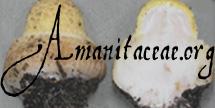
The cap of A. malleata is (30-) 50 - 120 (-150) mm wide, hemispheric at first, then more or less conic or campanulate, and nonappendiculate, with a strongly striate margin; it is grayish beige to leaden, becoming pallid dirty white in age. The flesh is white, unchanging when cut or bruised, and rather thin above the gills. The volva is distributed on the cap in large warts or patches, pale at first, then yellowish or pale ochraceous or dirty white in age. |
| gills |
The gills are free, creamy white to ochraceous cream and even slightly pinkish when drying, and somewhat ventricose, with fimbriate or lightly puncticulate edges . The short gills are of diverse lengths and infrequent in some material examined. |
| stem |
The stem is (60-) 100 - 120 (-150) × 10 - 20 mm, smooth, exannulate, narrowing upward, white to off-white above, becoming progressively more snakeskin-patterned and grayer toward the base. The flesh is white, stuffed at first, and rapidly becoming hollow. The saccate volva is fragile, breaking into more or less floccose shreds and fragments, whitish or with ochraceous stains or spots on the exterior with grayer hues on the inner surface. The limbus internus was lacking in material examined. |
| spores |
The spores measure (9.8-) 10.5 - 13.5 (-22) × (7.0-) 8.0 - 11.0 (-12.8) µm and are inamyloid and subglobose to broadly ellipsoid (occasionally ellipsoid). Clamps are not found at bases of basidia. |
| discussion |
This species has been described three different times (Tulloss, 1994) from France (Déps. Ain, Oise, and Somme). The hammered appearance of the cap in the first publication of an image of this species occurs in numerous other taxa in Amanita and is dependent upon environmental factors such localized decay from insect penetration of the cap's skin. The species is known only from Europe. The most similar species within section Vaginatae are A. dryophila Consiglio & Contu, Amanita cistetorum Contu & Pacioni, and the lesser known A. biovigera Singer.—R. E. Tulloss |
| brief editors | RET |
| name | Amanita malleata | ||||||||||||||||||||
| author | (Bon) Contu. 1986b. Boll. Assoc. Micol. Ecol. Romana 6-7: 43. | ||||||||||||||||||||
| name status | nomen acceptum | ||||||||||||||||||||
| english name | "Hammered Ringless Amanita" | ||||||||||||||||||||
| synonyms |
≡Amanitopsis malleata Bon. 1983. Doc. Mycol. 12(48): 33. [Since the epithet malleata was previously validated by Romagnesi (1982), "Piane ex" is here omitted from the authorial citation.]
≡Amanita malleata Piane nom. inval 1972. Bull. Soc. Naturalistes Oyonnax 19-21: 51-58. [No type specified. ICBN §37.3]
=Amanita vaginata var. malleata Piane "ex" Becker nom. inval. 1975. Bull. Trimestriel Féd. Mycol. Dauphiné-Savoie (56): 23. [Lacking full and direct reference to basionym; apparent basionym invalid. ICBN §33.2]
=Amanita lividopallescens var. malleata Piane ex Romagn. 1982. Bull. Trimestriel Soc. Mycol. France 98: 169, fig. 1.
=Amanita lividopallescens var. tigrina Romagn. ex Bon. 1986. Doc. Mycol. 17(65): 51. ≡Amanita lividopallescens var. tigrina Romagn. nom. inval. 1961. Nouv. Atlas Champ. 3: pl. 180. [No type specified. ICBN §37.1] [Note: Plate too yellow fide Romagnesi (1982: 169).] ≡Amanitopsis lividopallescens f. tigrina (Romagn.) Courtec. nom. inval. 1986. Clé Dét. Macroscop. Champ. Sup. Reg. Nord France: 189. [Published as "comb. ined." Lacking full and direct reference to basionym. ICBN §33.2, etc.] ≡Amanita oblongispora ("oblongospora") var. tigrina (Romagn. ex Bon) Contu nom. inval. 1989a. Bol. Soc. Micol. Madrid 13: 91. [Species name not validly published prior to this combination. ICBN §43.1.] ≡Amanita tigrina (Romagn. ex Bon) Contu nom. inval. 1990. Funghi Ambiente 53: 9. [Lacking full and direct reference to basionym. ICBN §33.2.] non Amanita tigrina (Bull. : Fr.) Lam. 1783. Encycl. Méthod. Bot. 1: 107. ≡Agaricus tigrinus Bull. ??. ≡Agaricus tigrinus Bull. : Fr. ??. ≡Lentinus tigrinus (Bull. : Fr.) ??.
=Amanita fraudulenta Contu nom. inval. 1999. Boll. Acc. Gioen. Sc. Nat. 356 : 17. [Two “basionyms” are cited—each having its own separate type; hence, basionym is not "clearly indicated." Avowed replacement for validly published name(s). ICBN §33.2, §52.1]
??Amanita subfraudulenta is cited here in MycoBank. Check this.?? The editors of this site owe a great debt to Dr. Cornelis Bas whose famous cigar box files of Amanita nomenclatural information gathered over three or more decades were made available to RET for computerization and make up the lion's share of the nomenclatural information presented on this site. | ||||||||||||||||||||
| MycoBank nos. | 108669, 450425, 108671, 129504, 116885 | ||||||||||||||||||||
| GenBank nos. |
Due to delays in data processing at GenBank, some accession numbers may lead to unreleased (pending) pages.
These pages will eventually be made live, so try again later. Search:
Showing 0 to 0 of 0 entries | ||||||||||||||||||||
| holotypes |
A. lividopallescens var. malleata—in herb. H. Romagnesi (PC). A. lividopallescens var. tigrina—in herb. M. Bon (LIP). | ||||||||||||||||||||
| lectotypes | A. malleata—in herb. M. Bon (LIP) | ||||||||||||||||||||
| lectotypifications | A. malleata—Tulloss. 1994. Mycotaxon 52.: 349, figs. 29-30. | ||||||||||||||||||||
| type studies |
A. lividopallescens var. malleata—Tulloss. 1994. Mycotaxon 52: 340, figs. 23-24. A. lividopallescens var. tigrina—Ibid.: 344, figs. 25-26. A. malleata—Ibid.: 349, figs. 29-30. | ||||||||||||||||||||
| intro |
The following text may make multiple use of each data field. The field may contain magenta text presenting data from a type study and/or revision of other original material cited in the protolog of the present taxon. Macroscopic descriptions in magenta are a combination of data from the protolog and additional observations made on the exiccata during revision of the cited original material. The same field may also contain black text, which is data from a revision of the present taxon (including non-type material and/or material not cited in the protolog). Paragraphs of black text will be labeled if further subdivision of this text is appropriate. Olive text indicates a specimen that has not been thoroughly examined (for example, for microscopic details) and marks other places in the text where data is missing or uncertain. The following material concerning macroscopic characters of this species are derived from the several protologs cited in the text. The information concerning microscopic anatomy is based on original research of R. E. Tulloss including (Tulloss 1994). | ||||||||||||||||||||
| lamella edge tissue | sterile. | ||||||||||||||||||||
| basidiospores |
from type study of A. malleata (Tulloss 1994): [40/1/1] (9.8-) 10.0 - 12.8 (-14.0) × (6.5-) 8.0 - 10.5 (-11.8) μm, (L = 11.6 μm; W = 9.5 μm; Q = (1.10-) 1.14 - 1.39 (-1.54); Q = 1.23), hyaline or with slightly obscured contents, colorless, smooth, thin-walled, inamyloid, subglobose to broadly ellipsoid, occasionally ellipsoid, infrequently pip-shaped, often at least somewhat adaxially flattened; apiculus sublateral, cylindric, occasionally proportionately thick and prominent; contents monoguttulate to multiguttulate to granular; color in deposit not recorded. from type study of A. lividopallescens var. malleata (Tulloss 1994): [40/1/1] (10.5-) 11.0 - 13.8 (-16.0) × (8.5-) 8.8 - 11.0 (-11.5) μm, (L = 12.3 μm; W = 9.7 μm; Q = (1.12-) 1.16 - 1.37 (-1.42); Q = 1.27), hyaline, colorless, smooth, thin-walled, inamyloid, broadly ellipsoid to ellipsoid, infrequently subglobose, occasionally expanded at one end, usually adaxially flattened; apiculus sublateral, cylindric to truncate-conic; contents monoguttulate with additional small granules; white in deposit. from type study of A. lividopallescens var. tigrina (Tulloss 1994): [60/3/1] (10.0-) 10.5 - 14.0 (-22) × (7.0-) 7.8 - 11.5 μm, (L = 11.5 - 12.2 μm; L' = 11.8 μm; W = 8.8 - 9.5 μm; W' = 9.2 μm; Q = (1.09-) 1.13 - 1.51 (-2.0); Q = 1.22 - 1.41; Q' = 1.28), hyaline, colorless, smooth, thin-walled, inamyloid, subglobose to broadly ellipsoid to ellipsoid, rarely elongate, occasionally expanded at one end, with those from immature material often distorted (e.g., langeniform, pyriform, or with triangular cross-section), often adaxially flattened; apiculus sublateral or (rarely) latteral, truncate-conic, relatively broad; contents guttulate; white in deposit. composite data from all material revised by RET: [140/5/3] (9.8-) 10.5 - 13.5 (-22) × (7.0-) 8.0 - 11.0 (-12.8) μm, (L = 11.5 - 12.3 μm; L' = 11.9 μm; W = (8.8-) 9.4 - 9.7 μm; W' = 9.4 μm; Q = (1.09-) 1.14 - 1.45 (-2.0); Q = 1.22 - 1.27 (-1.41); Q' = 1.27), predominantly hyaline, infrequently with contents slightly obscured, colorless, smooth, thin-walled, inamyloid, subglobose to broadly ellipsoid to ellipsoid, rarely elongate, sometimes expanded at one end, often adaxially flattened, occasionally "gigantic" and taking unusual shapes in immature material; apiculus sublateral (rarely lateral), cylindric to truncate-conic; contents monoguttulate to multiguttulate to granular; white in deposit. | ||||||||||||||||||||
| ecology | From protologs: Romagnesi (1982): In calcareous or calcareous-clay soils, under broad-leafed trees, at times with some admixture of Pinus in the départments of Doubs, Marne, and Oise. Bon (1986): Under broad-leafed trees. Uncommon, end of spring into summer, in woods on calcareous clay. Originating deep in hard, clayey soil and difficult to collect without damage. Contu (1986b): Gregarious, in grassy area with calcareous soil near areas of brush or forests of broad-leafed trees, Jura Mountains. | ||||||||||||||||||||
| material examined |
Tulloss (1994):
FRANCE: AIN—Arfontaine, ca. Oyonnax, 22.ix.1980 L. Bas s.n. [Bon 80092206] (lectotype of A. malleata, in herb. M. Bon => LIP, mixed collection including lectotype per Tulloss (1994)).
OISE—Maysel, 6.viii.1957 H. Romagnesi 57.46 (holotype of A. lividopallescens var. malleata, in herb. Romagnesi => PC).
SOMME—Robeaucourt-Franqueville, | ||||||||||||||||||||
| citations | —R. E. Tulloss | ||||||||||||||||||||
| editors | RET | ||||||||||||||||||||
Information to support the viewer in reading the content of "technical" tabs can be found here.
| name | Amanita malleata |
| bottom links | [ Keys & Checklists ] |
| name | Amanita malleata |
| bottom links | [ Keys & Checklists ] |
 Spore data sets and their composite
Each spore data set is intended to comprise a set of measurements from a single specimen made by a single observer; and explanations prepared for this site talk about specimen-observer pairs associated with each data set. Combining more data into a single data set is non-optimal because it obscures observer differences (which may be valuable for instructional purposes, for example) and may obscure instances in which a single collection inadvertently contains a mixture of taxa.
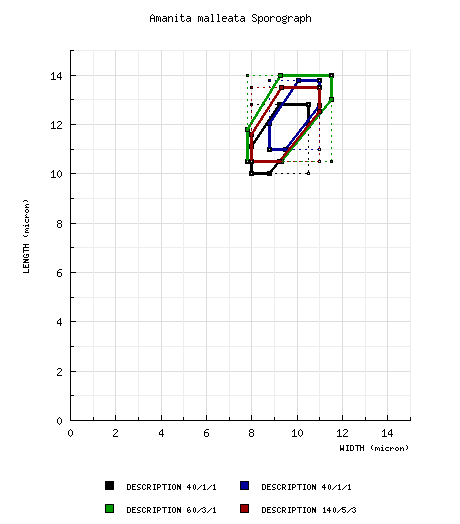

Text and User-Generated Sporographs are published under the Creative Commons License.

In the case of a taxon page, image credits are on the 'image' tab.