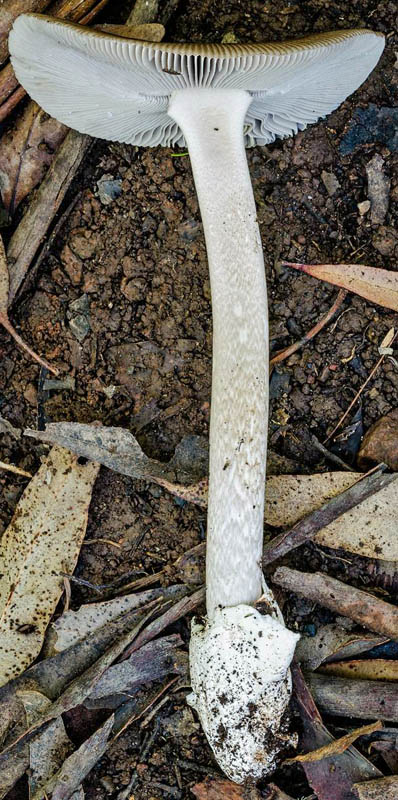
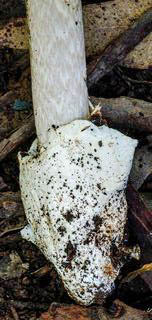
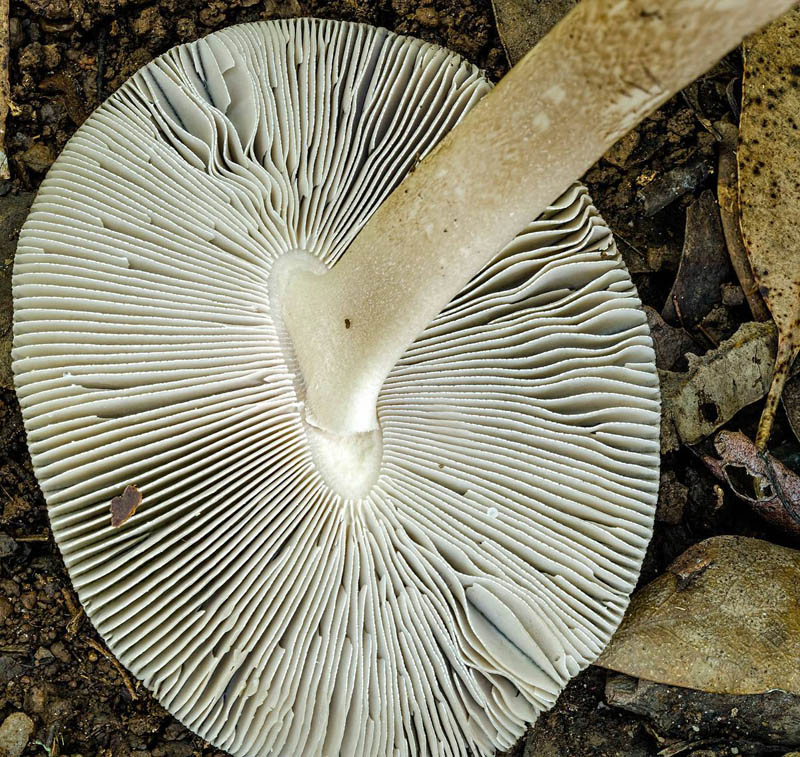
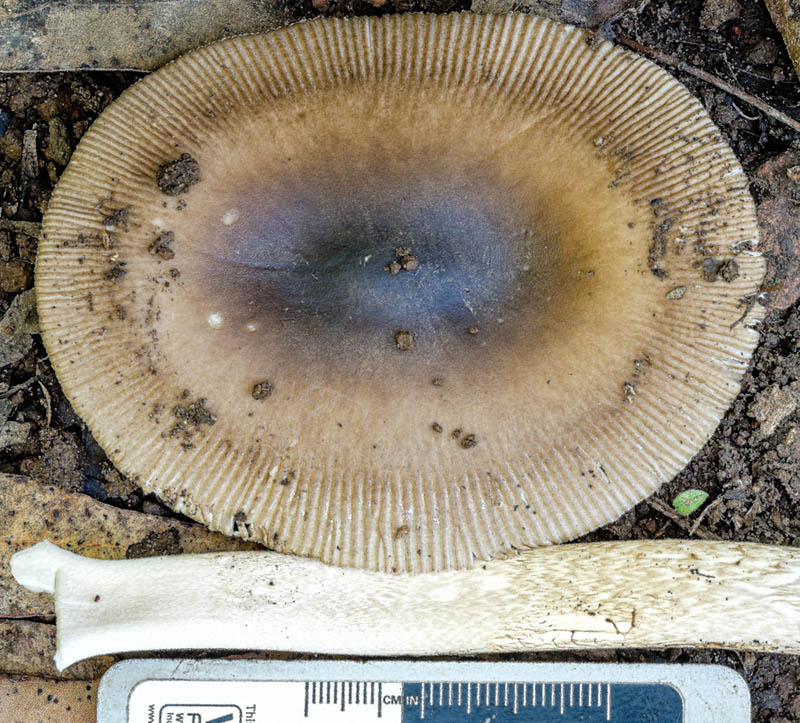
1. Amanita kundabungii, Yarrahapinni St. For., New South Wales, Australia. (RET 679-8).
2. Amanita kundabungii, Yarrahapinni St. For., New South Wales, Australia. (RET 679-8).
3. Amanita kundabungii, Yarrahapinni St. For., New South Wales, Australia. (RET 679-8).
4. Amanita kundabungii, Yarrahapinni St. For., New South Wales, Australia. (RET 679-8).
intro
For the time being see the technical tab as data is
collected for this species.
discussion
—R. E. Tulloss and L. V. Kudzma
brief editors
RET
name
Amanita kundabungii
author
Tulloss & Kudzma
name status
nomen provisorum
etymology
kundabungii Latin genitive of
Kundabung. In honor of Ian Dodd
("Kundabung Kid").
GenBank nos.
Due to delays in data processing at GenBank, some accession numbers may lead to unreleased (pending) pages.
These pages will eventually be made live, so try again later.
free to receding, close, ?,
delicate and easily damaged;
lamellulae ??.
stipe
??, firm, ??; with surface decoration zebroid
(or flame patterned) from original pale gray surface
breaking and revealing white context, at least
sometimes flattened horizontally; context
white, ??, exannulate; universal veil
saccate, unusually obconic, with outer surface white;
entirely below surface of substrate.
odor/taste
neither recorded.
ecology
Solitary. In loose, damp soil, with
Eucalyptus in semi-rainforest.
material examined
AUSTRALIA: NEW SOUTH
WALES—Yarrahapinni St. For., N. of Grassy
Head [30.78165° S/ 152.982° E], 15.i.2015 Ian Dodd
75621/628 [mushroomobserver #196610]
(RET 679-8, nrITS seq'd.).
discussion
In New South Wales, this species is unique (to date)
for the
combination of a three-zone pileus, light gray
zebroid stipe decoration, an obconic volval sac, and
the 5'-TCTGGCC... 5' motif for its nrLSU
sequence.
For more examples of members of the Vaginatae
with the curious 5' motif of nrLSU, see the end of
the techtab on this
page.
Although, this probably likely to change with time,
it is presently the case (16 April 2017) that the
the nrITS sequence derived from A. kundabungii
has as its closest matches in GenBank clones of a
sequestrate Amanita from Australia (see,
GenBank sequences GQ925401-GQ925403).
Amanita kundabungii was previously called
"Amanita sp-AUS07" in these pages.
citations
—R. E. Tulloss and L. V. Kudzma
editors
RET
Information to support the viewer in reading the content of "technical" tabs
can be found here.
name
Amanita kundabungii
name status
nomen provisorum
author
Tulloss & Kudzma
images
1. Amanita kundabungii, Yarrahapinni St. For., New South Wales, Australia. (RET 679-8).
2. Amanita kundabungii, Yarrahapinni St. For., New South Wales, Australia. (RET 679-8).
3. Amanita kundabungii, Yarrahapinni St. For., New South Wales, Australia. (RET 679-8).
4. Amanita kundabungii, Yarrahapinni St. For., New South Wales, Australia. (RET 679-8).
photo
Ian Dodd - (1-4) - Yarrahapinni State Forest,
New South Wales, Australia.&npsp; ()
[Note: ??]
name
Amanita kundabungii
name
Amanita kundabungii
Spore data for collections provisionally identified as: Amanita kundabungii Tulloss & Kudzma
Each spore data set is intended to comprise a set of measurements from a single specimen made by a single observer;
and explanations prepared for this site talk about specimen-observer pairs associated with each data set.
Combining more data into a single data set is non-optimal because it obscures observer differences
(which may be valuable for instructional purposes, for example) and may obscure instances in which
a single collection inadvertently contains a mixture of taxa.





 Spore data sets and their composite