
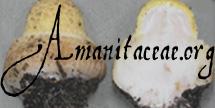
| name | Amanita ibotengutake |
| name status | nomen acceptum |
| author | T. Oda, C. Tanaka & Tsuda |
| english name | "Japanese Ringed-Bulb Amanita" |
| intro | The following is based on the original description of Amanita ibotengutake (Oda et al. 2002). |
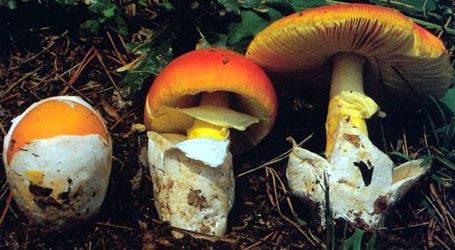
| cap | The cap is 75-160 mm wide, hemispherical at first, then convex to plane, often eventually with an uplifted margin, brown to dark brown to yellowish or orangish brown, often darkest in the center, and smooth. The striations on the cap margin have lengths up to 30% of the cap's radius. The cap flesh is white and 6-8 mm thick above the stem. The volval remnants on the cap are pallid pyramidal warts or small patches. |
| gills | The gills of this species are free to remote, 9-15 mm broad, white to pale cream, crowded, and have a pruinose free edge. The short gills are truncate to subtruncate in 1-6 ranks. |
| stem | 55 - 160 × 9 - 24 mm, white to yellowish white to pale yellow, narrowing upward, and hollow to stuffed. The stem's basal bulb is 30 - 40 × 14-36 mm and globose or subglobose or broadly ellipsoid or ellipsoid or spindle-shaped. The stem bear a median skirt-like ring that is sometimes torn away during expansion of the mushroom and may remain hanging from the cap's margin. The volval remnants on the top of the stem's bulb make up several rather closely packed whole or broken [white or whitish] rings. |
| odor/taste | Fresh specimens are said to have an odor similar to "resin." |
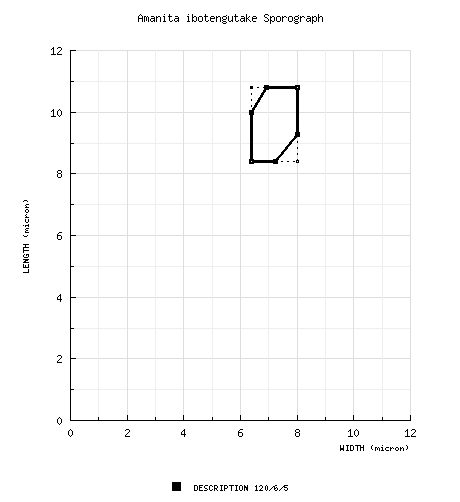
| spores | The spore measurements are as follows: (8.0-) 8.4 - 10.8 (-12.0) × (5.6-) 6.4 - 8.0 (-10.0) μm. The spores are broadly ellipsoid to ellipsoid (infrequently subglobose or elongate) and inamyloid. Clamps are commonly present at bases of basidia. |
| discussion |
The authors claim the species is segregatable from A. subglobosa Zhu L. Yang by molecular means. more t.b.d.—R. E. Tulloss |
| brief editors | RET |
| name | Amanita ibotengutake | ||||||||||||||||||||||||||||||||||||||||||||||||||||||||||||||||||||||||
| author | T. Oda et al. 2002. Mycol. Progress 1(4): 355-356. | ||||||||||||||||||||||||||||||||||||||||||||||||||||||||||||||||||||||||
| name status | nomen acceptum | ||||||||||||||||||||||||||||||||||||||||||||||||||||||||||||||||||||||||
| english name | "Japanese Ringed-Bulb Amanita" | ||||||||||||||||||||||||||||||||||||||||||||||||||||||||||||||||||||||||
| MycoBank nos. | 466011 | ||||||||||||||||||||||||||||||||||||||||||||||||||||||||||||||||||||||||
| GenBank nos. |
Due to delays in data processing at GenBank, some accession numbers may lead to unreleased (pending) pages.
These pages will eventually be made live, so try again later. Search:
Showing 1 to 14 of 14 entries | ||||||||||||||||||||||||||||||||||||||||||||||||||||||||||||||||||||||||
| holotypes | CBM | ||||||||||||||||||||||||||||||||||||||||||||||||||||||||||||||||||||||||
| intro |
The following text may make multiple use of each data field. The field may contain magenta text presenting data from a type study and/or revision of other original material cited in the protolog of the present taxon. Macroscopic descriptions in magenta are a combination of data from the protolog and additional observations made on the exiccata during revision of the cited original material. The same field may also contain black text, which is data from a revision of the present taxon (including non-type material and/or material not cited in the protolog). Paragraphs of black text will be labeled if further subdivision of this text is appropriate. Olive text indicates a specimen that has not been thoroughly examined (for example, for microscopic details) and marks other places in the text where data is missing or uncertain. The following material is derived from the protolog of the present taxon. | ||||||||||||||||||||||||||||||||||||||||||||||||||||||||||||||||||||||||
| pileus | from protolog: 75 - 160 mm wide, brown to dark brown to yellowish brown to brownish orange (5C4-5, 5D-F4-8, 6E-F5-8), often darker over disc and paler toward margin, at first hemispheric, then convex to planar, smooth; context white, 6 - 8 mm thick over stipe; margin striate (0.1 - 0.3R), often upturned, "sometimes appendiculate"; universal veil as pyramidal warts (up to 1 × 1 - 3 mm) or (sometimes) small patches. | ||||||||||||||||||||||||||||||||||||||||||||||||||||||||||||||||||||||||
| lamellae | from protolog: free to remote, crowded, white to pale cream, 9 - 15 mm broad, with pruinose edge; lamellulae truncate to subtruncate in "1 - 6 ranks." | ||||||||||||||||||||||||||||||||||||||||||||||||||||||||||||||||||||||||
| stipe | from protolog: 55 - 150 × 9 - 24 mm, white to yellowish white to pale yellow (3A1-3), narrowing upward, pruinose above, scaly to fibrillose below; bulb 30 - 40 × 14 - 36 mm, globose to subglobose to broadly ellipsoid to ellipsoid to fusiform; context hollow to stuffed; partial veil median, membranous, fragile, sometimes remaining in fragments on pileus margin; universal veil as several whole to irregularly broken ascending rings on lower stipe and upper bulb. | ||||||||||||||||||||||||||||||||||||||||||||||||||||||||||||||||||||||||
| odor/taste | from protolog: Odor slightly of resin in fresh material. Taste not recorded. | ||||||||||||||||||||||||||||||||||||||||||||||||||||||||||||||||||||||||
| macrochemical tests |
none recorded. | ||||||||||||||||||||||||||||||||||||||||||||||||||||||||||||||||||||||||
| pileipellis | from protolog: suprapellis ca. 80 - 200 μm thick, gelatinized, colorless to slightly brownish; subpellis ca. 140 - 250 μm thick, [?ungelatinized ,] slightly brownish; filamentous hyphae 1 - 5 μm wide, branching, interwoven to subradial; vascular hyphae 3 - 6 μm wide; clamps "usually" present. | ||||||||||||||||||||||||||||||||||||||||||||||||||||||||||||||||||||||||
| pileus context | not described. | ||||||||||||||||||||||||||||||||||||||||||||||||||||||||||||||||||||||||
| lamella trama | from protolog: bilateral; wcs = ca. 40 - 50 μm wide; filamentous hyphae 2 - 10 μm wide, branching; inflated cells in central stratum cylindric to "cylindro-clavate," 65 - 280 × 20 - 30 μm, inflated cells in lateral strata [subhymenial base] clavate to "cylindro-clavate" to subfusiform to doliiform, 30 - 140 × 10 - 40 μm; vascular hyphae 2 - 10 μm wide; clamps "usually" present. [Note: Presence or absence of terminal inflated cells in subhymenial base were not mentioned.—ed.] | ||||||||||||||||||||||||||||||||||||||||||||||||||||||||||||||||||||||||
| subhymenium | from protolog: "ramose-inflated," ca. 15 - 35 μm thick; inflated cells "usually" in 1 - 3 layers, globose to subglobose to broadly ellipsoid to ellipsoid to elongate to cylindric to pyriform to doliiform to ovate to clavate to irregularly shaped, 6 - 22 × 5 - 20 μm. | ||||||||||||||||||||||||||||||||||||||||||||||||||||||||||||||||||||||||
| basidia | from protolog: 40 - 53 × 10 - 14 μm, 4-sterigmate, with sterigmata 2 - 7 μm long; clamps "usually" present. | ||||||||||||||||||||||||||||||||||||||||||||||||||||||||||||||||||||||||
| universal veil | from protolog: On pileus: filamentous hyphae 2 - 8 μm wide, branching, interwoven; inflated cells abundant, globose to subglobose to broadly ellipsoid to ellipsoid to elongate to cylindric to fusiform to clavate to sphaeropedunculate to pyriform, 20 - 55 × 13 - 35 μm, terminal singly or in short chains; vascular hyphae 2 - 20 μm wide; clamps "often" present. On stipe base: filamentous hyphae 2 - 8 μm wide, dominant, branching, interwoven, densely packed; inflated cells globose to subglobose to broadly ellipsoid to ellipsoid to ovate to clavate to pyriform to fusiform, 20 - 100 × 15 - 55 μm, terminal singly; vascular hyphae 3 - 8 μm wide; clamps "often" present. | ||||||||||||||||||||||||||||||||||||||||||||||||||||||||||||||||||||||||
| stipe context | from protolog: longitudinally acrophysalidic; filamentous hyphae 2 - 10 μm wide, branching; acrophysalides 110 - 480 × 20 - 60 μm; vascular hyphae rare; clamps "usually" present. In stuffing of central cylinder, filamentous hyphae 2 - 13 μm wide dominating; inflated cells globose to subglobose to broadly ellipsoid to ellipsoid to elongate to ovate to clavate to sphaeropedunculate, 25 - 90 × 12 - 45 μm, terminal singly: vascular hyphae 3 - 14 μm wide; clamps "usually" present. | ||||||||||||||||||||||||||||||||||||||||||||||||||||||||||||||||||||||||
| partial veil | from protolog: filamentous hyphae dominating, 1 - 10 μm wide, branching, interwoven, densely packed; inflated cells ellipsoid to fusiform to clavate to cylindric-clavate, 24 - 120 × 9 - 35 μm, terminal singly; vascular hyphae 2 - 15 μm wide; clamps "usually" present. | ||||||||||||||||||||||||||||||||||||||||||||||||||||||||||||||||||||||||
| lamella edge tissue | not described. | ||||||||||||||||||||||||||||||||||||||||||||||||||||||||||||||||||||||||
| basidiospores | from protolog: [120/6/5] (8.0-) 8.4 - 10.8 (-12.0) × (5.6-) 6.4 - 8.0 (-10.0) μm, (Q = (1.08-) 1.16-1.56 (-1.73); Q' = 1.33 ± 0.12, hyaline, smooth, inamyloid, broadly ellipsoid to ellipsoid, sometimes subglobose or elongate, often adaxially flattened (per figure); apiculus sublateral and cylindric (both per figure); contents not described; color in deposit not recorded. | ||||||||||||||||||||||||||||||||||||||||||||||||||||||||||||||||||||||||
| ecology | from protolog: Solitary to gregarious. Hokkaido: At ca. 200 - 400 m elev. In plantation of Abies sachalinensis. Honshu: At ca. 10 - 140 m elev. In mixed forest with Quercus serrata and Pinus densiflora or in forest of P. densiflora or in beach forest of P. thunbergii or under Lithocarpus edulis or in plantation of Tsuga. | ||||||||||||||||||||||||||||||||||||||||||||||||||||||||||||||||||||||||
| material examined | from protolog: JAPAN: HOKKAIDO—Abuta-gun - Rusutsu-mura [ca. 400 m], 21.iii.1997 Y. Nishihara s.n. [LEM970662] (paratype, CBM FB-30972); Toyoura-cho, Shinyamanashi [ca. 200 m], 18.viii.1997 Y. Nishihara s.n. [LEM 970678] (paratype, CBM FB-30974). HONSHU—Aomori-ken - Aomori-shi, Sukimino [ca. 10 m], 30.viii.1997 K. Kudo [LEM 970669] (paratype, CBM FB-30967). Kyoto-fu - Kyoto-shi, Kita-ku, Kamigamo, Kamigamo Experimental Forest, 31.x.1995 T. Oda s.n. [LEM 950167] (paratype, CBM 30975); Kyoto-shi, Sakyo-ku, Kaguraoka-cho, Mt. Yoshida [ca. 100 m], 11.vii.1999 T. Oda s.n. [LEM 991009a] (paratype, CBM FB-30968), 5.x.2000 T. Oda s.n. (holotype, CBM FB-30969). Miyagi-ken - Shida-gun, Matsuyama-cho, Mt. Takatera [ca. 140 m], 22.ix.2000 Y. Andou (paratype, CBM FB-30971); Sendai-shi, Fukanuma Beach, 30.vi.2001 Y. Andou s.n. (paratype, CBM FB-30966). Niigata-ken - Niigata-shi, campus of Niigata Univ., 15.vii.1997 S. Sakai s.n. [LEM 970680] (paratype, CBM FB-30973). Osaka-ken - unkn. loc., 3.xi.1998 poisoning victim in emergency hospital (Osaka Senri Kyumei Kyukyu Center) s.n. (paratype, CBM FB-30979); Hirakata-shi, Kourigaoka, 5.x.1997 T. Hashimoto s.n. (paratype, CBM FB-30970). | ||||||||||||||||||||||||||||||||||||||||||||||||||||||||||||||||||||||||
| discussion |
from protolog: The species contains muscimol and ibotenic acid; the name of the latter was derived from the Japanese name for this species when the species was mistakenly believed to be assignable to Amanita pantherina. The authors point out that this is clearly an error on both morphological and phylogenetic grounds. The rather common clamps in the present species indicate that it must be classified in series Amanita on morphological evidence alone. The authors suggest two taxa as most closely related to the present species—A. regalis and A. subglobosa. The following figure provides a comparison for sporographs of the present taxon and A. subglobosa: Sporograph comparison of the present species with A. regalis is provided in the following figure: | ||||||||||||||||||||||||||||||||||||||||||||||||||||||||||||||||||||||||
| citations | —R. E. Tulloss | ||||||||||||||||||||||||||||||||||||||||||||||||||||||||||||||||||||||||
| editors | RET | ||||||||||||||||||||||||||||||||||||||||||||||||||||||||||||||||||||||||
Information to support the viewer in reading the content of "technical" tabs can be found here.
| name | Amanita ibotengutake |
| bottom links | [ Keys & Checklists ] |
| name | Amanita ibotengutake |
| bottom links | [ Keys & Checklists ] |
 Spore data sets and their composite
Each spore data set is intended to comprise a set of measurements from a single specimen made by a single observer; and explanations prepared for this site talk about specimen-observer pairs associated with each data set. Combining more data into a single data set is non-optimal because it obscures observer differences (which may be valuable for instructional purposes, for example) and may obscure instances in which a single collection inadvertently contains a mixture of taxa.

Text and User-Generated Sporographs are published under the Creative Commons License.

In the case of a taxon page, image credits are on the 'image' tab.