

| name | Amanita gwyniana |
| name status | nomen acceptum |
| author | Coker |
| english name | "Gwyn's Destroying Angel" |
| intro | The following is based on the original description from Coker (1927), with the addition of my observations of the type. RET would like to make it clear at the outset that this species is very difficult to separate from A. elliptosperma. The possibility of synonymy is very real. |
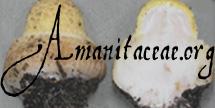
| cap | The cap is 35 - 45 mm wide, plano-convex, depressed in the center, pale creamy to nearly white, lacking volval remains, slightly viscid, with a strongly decurved or incurved, nonstriate margin. The flesh is 2.5 mm thick above the stem, thinning rapidly to a membrane, white. |
| gills | The gills are moderately close, broadly rounded at the margin, white, 4 mm broad, barely reaching the stem. |
| stem | The stem is up to 70 × 6 mm, smooth, nearly pure white, nearly cylindric, solid or very firmly stuffed. The ring is small, membranous, superior, collapsing against the stem. The bulb is 18 - 20 mm wide, ellipsoid, somewhat pointed below in "button." The volva is limbate projecting 6 - 8 mm above the bulb. The limbs are somewhat thickened and standing free from the stem. |
| odor/taste | The mushroom has the odor of "chloride of lime"—smells of decaying protein. This species should be considered deadly POISONOUS. |
| spores | Spores (from the holotype) of A. gwyniana measure (8.4-) 8.9 - 11.8 (-12.4) × 6.0 - 8.0 (-8.7) µm and are ellipsoid (infrequently elongate) and amyloid. Clamps are probably absent from bases of basidia. |
| discussion |
Originally described from North Carolina, USA in association with American Chestnut at elevations close to 1000 meters.
In his discussion of this species, Coker emphasizes the small size and the rounded external ends and the proportional broadness of the gills. Within the "elliptosperma group" [a key including the group is here], the odor of chloride of lime is also distinctive. The fact that this species is never or (rarely) reported may be due to the near extinction of American Chestnut. This species might best be located by searching near American chestnut stumps with still living roots. Part of the confusion concerning this species was introduced by a second collection included in the original description. I have examined this specimen, which appears to be A. bisporigera G. F. Atk. A specimen with plentiful subglobose spores and plentiful two-spored basidia introduced an incorrect amount of variation into the species description.—R. E. Tulloss |
| brief editors | RET |
| name | Amanita gwyniana | ||||||||||||||||||||
| author | Coker. 1927. J. Elisha Mitchell Scient. Soc. 43(1/2): 140, pl. 17, 22. | ||||||||||||||||||||
| name status | nomen acceptum | ||||||||||||||||||||
| english name | "Gwyn's Destroying Angel" | ||||||||||||||||||||
| etymology | Gwyn + -ana, suffix indicating possession; hence, "of Gwyn" | ||||||||||||||||||||
| MycoBank nos. | 266692 | ||||||||||||||||||||
| GenBank nos. |
Due to delays in data processing at GenBank, some accession numbers may lead to unreleased (pending) pages.
These pages will eventually be made live, so try again later. Search:
Showing 0 to 0 of 0 entries | ||||||||||||||||||||
| holotypes | NCU | ||||||||||||||||||||
| intro |
The following text may make multiple use of each data field. The field may contain magenta text presenting data from a type study and/or revision of other original material cited in the protolog of the present taxon. Macroscopic descriptions in magenta are a combination of data from the protolog and additional observations made on the exiccata during revision of the cited original material. The same field may also contain black text, which is data from a revision of the present taxon (including non-type material and/or material not cited in the protolog). Paragraphs of black text will be labeled if further subdivision of this text is appropriate. Olive text indicates a specimen that has not been thoroughly examined (for example, for microscopic details) and marks other places in the text where data is missing or uncertain. The following material not directly from the protolog of the present taxon and not cited as the work of Dr. Z. L. Yang or another researcher is based upon original research by R. E. Tulloss. | ||||||||||||||||||||
| pileus | ?? | ||||||||||||||||||||
| lamellae | ?? | ||||||||||||||||||||
| stipe | ?? | ||||||||||||||||||||
| odor/taste | ?? | ||||||||||||||||||||
| macrochemical tests |
none recorded. | ||||||||||||||||||||
| pileipellis | ?? | ||||||||||||||||||||
| pileus context | ?? | ||||||||||||||||||||
| lamella trama | ?? | ||||||||||||||||||||
| subhymenium | ?? | ||||||||||||||||||||
| basidia | ?? | ||||||||||||||||||||
| universal veil | ?? | ||||||||||||||||||||
| stipe context | ?? | ||||||||||||||||||||
| partial veil | ?? | ||||||||||||||||||||
| lamella edge tissue | sterile. | ||||||||||||||||||||
| basidiospores | [50/2/1] (8.4-) 8.9 - 11.8 × 6.0 - 8.0 (-8.7) μm, (L = 9.5 - 10.6 μm; L' = 10.1 μm; W = 6.5 - 6.9 μm; W' = 6.7 μm; Q = (1.34-) 1.37 - 1.68 (-1.95); Q = 1.46 - 1.54; Q' = 1.50), hyaline, colorless, smooth, thin-walled, strongly amyloid, ellipsoid, occasionally elongate, often adaxially flattened, expanded at one end; apiculus sublateral, cylindric, proportionately small; contents granular; "pure white" in deposit. | ||||||||||||||||||||
| ecology | A pair. North Carolina: At ca. 1070 m elev. Under American Chestnut (Castanea dentata). | ||||||||||||||||||||
| material examined | U.S.A.: NORTH CAROLINA—Unkn. Co. - Springdale Farm, 17.viii.1926 Totten & Couch #1 [Coker 8149] (holotype, NCU). | ||||||||||||||||||||
| discussion |
The sole paratype of A. gwyniana comprises material of A. bisporigera—is not conspecific with the holotype of A. gwyniana. The following illustrations compare the sporographs of the present species to those of other ellipsoid spored taxa of the Phalloideae described from eastern North America: | ||||||||||||||||||||
| citations | —R. E. Tulloss | ||||||||||||||||||||
| editors | RET | ||||||||||||||||||||
Information to support the viewer in reading the content of "technical" tabs can be found here.
| name | Amanita gwyniana |
| bottom links | [ Keys & Checklists ] |
| name | Amanita gwyniana |
| bottom links | [ Keys & Checklists ] |
 Spore data sets and their composite
Each spore data set is intended to comprise a set of measurements from a single specimen made by a single observer; and explanations prepared for this site talk about specimen-observer pairs associated with each data set. Combining more data into a single data set is non-optimal because it obscures observer differences (which may be valuable for instructional purposes, for example) and may obscure instances in which a single collection inadvertently contains a mixture of taxa.
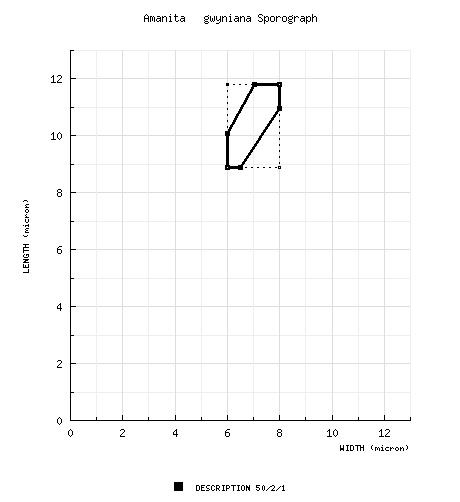

Text and User-Generated Sporographs are published under the Creative Commons License.

In the case of a taxon page, image credits are on the 'image' tab.