
| name | Amanita crassa |
| name status | nomen acceptum |
| author | Bas |
| english name | "Argentine Pinecone Lepidella" |
| intro | This description is based on the original description of Amanita crassa in Dr. Bas' thesis on section Lepidella (1969). |
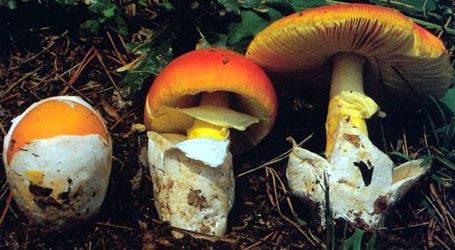
| cap | The cap of A.crassa is about 150 mm wide, convex with a slightly depressed center, thick-fleshed, white, dry, strongly appendiculate, with a nonstriate, slightly inflected margin. The cap is covered with thick, adnate, radially fibrillose, polygonate patches to truncate pyramidal warts with felted tips, towards the margin these warts gradually pass into thick, shingle-like, fibrillose scales with felted, subtruncate tips. |
| gills | The gills are crowded, free, rather thick, moderately broad, and pale buff. The short gills narrow gradually toward the stem. |
| stem | The stem is about 100 × 50 mm, white, subfelted to glabrous, annulate, with two thick, concentric, subfloccose volval rings around the upper half of a pronounced bulb. |
| odor/taste | The odor was described as "pungent, like A. chlorinosma." |
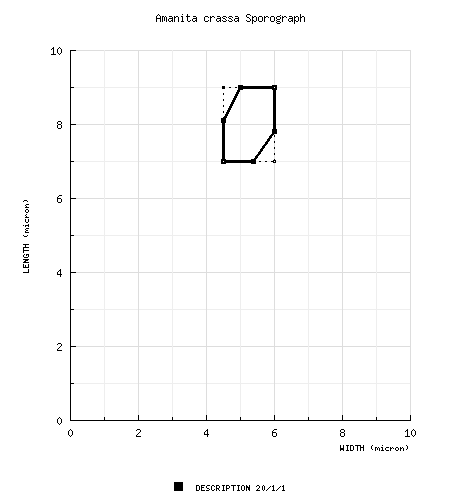
| spores | The spores measure (6.5-) 7 - 9 × 4.5 - 6 µm and are amyloid and ellipsoid to elongate. Clamps are abundant at bases of basidia. |
| discussion |
Amanita crassa is known only from Argentina, the type was found in dung, although that doesn't resolve the issue of whether the species forms mycorrhizae. On the other hand recent research shows that amanitas capable of living without symbiosis are all restricted to subsect. Vittadiniae. Bas placed this species in his stirps Ravenelii. For information about related taxa, see Amanita ravenelii (Berk. & M. A. Curtis) Sacc.—R. E. Tulloss |
| brief editors | RET |
| name | Amanita crassa | ||||||||||||||||||||
| author | Bas. 1969. Persoonia 5: 402, figs. 118-120. | ||||||||||||||||||||
| name status | nomen acceptum | ||||||||||||||||||||
| english name | "Argentine Pinecone Lepidella" | ||||||||||||||||||||
| MycoBank nos. | 308548 | ||||||||||||||||||||
| GenBank nos. |
Due to delays in data processing at GenBank, some accession numbers may lead to unreleased (pending) pages.
These pages will eventually be made live, so try again later. Search:
Showing 0 to 0 of 0 entries | ||||||||||||||||||||
| holotypes | BAFC | ||||||||||||||||||||
| intro |
The following text may make multiple use of each data field. The field may contain magenta text presenting data from a type study and/or revision of other original material cited in the protolog of the present taxon. Macroscopic descriptions in magenta are a combination of data from the protolog and additional observations made on the exiccata during revision of the cited original material. The same field may also contain black text, which is data from a revision of the present taxon (including non-type material and/or material not cited in the protolog). Paragraphs of black text will be labeled if further subdivision of this text is appropriate. Olive text indicates a specimen that has not been thoroughly examined (for example, for microscopic details) and marks other places in the text where data is missing or uncertain. The macroscopic description is largely based on the protolog, and all material in quotation marks is likewise taken from the protolog unless otherwise identified. from protolog: Basidiome "large, thickset." | ||||||||||||||||||||
| pileus | from protolog: 150± mm wide, white, convex, with slightly depressed disc, dry; context white, thick; margin nonstriate, strongly appendiculate, slightly inflected; universal veil as polygonal patches to truncate pyramidal warts with felted tips, covering pileipellis except for a few narrow strip here and there, thick, up to 15 mm wide, adnate, radially fibrillose, towards margin passing into thick and imbricate, fibrillose scales with felted and subtruncate tips, up to 15 × 10 mm, with many scales and warts having one or two concentric ridges. | ||||||||||||||||||||
| lamellae | from protolog: free, crowded, buff, thick, moderately broad, with entire edge; lamellulae attenuate. | ||||||||||||||||||||
| stipe | from protolog: 100 × 50 mm, white, broadly ventricose and bulbous except for narrow region near the apex, with pointed, subradicating base, subfelted to glabrous; context white, firm; partial veil subapical, membranous, partly patent, white, vaguely striate above, subfelted to glabrous below, rather rigid in exsiccatum of holotype; universal veil as two thick, concentric rings on the upper half of the expanded part of the stipe, subfloccose. | ||||||||||||||||||||
| odor/taste | from protolog: Odor pungent, like that of A. chlorinosma. Taste not recorded. | ||||||||||||||||||||
| macrochemical tests |
none recorded. | ||||||||||||||||||||
| pileipellis | from protolog: "in radial sections of warts and underlying tissue, impossible to locate," apparently found between warts, slightly yellowish in alkaline solution; filamentous hyphae 4 - 8 μm wide, with interwoven to subradial arrangement, often with refractive contents. | ||||||||||||||||||||
| pileus context | not described. | ||||||||||||||||||||
| lamella trama | from protolog: bilateral. | ||||||||||||||||||||
| subhymenium | from protolog: ramose. | ||||||||||||||||||||
| basidia | from protolog: 35 - 45 × 6 - 8 (-9) μm, 4-sterigmate; clamps abundant. | ||||||||||||||||||||
| universal veil | from protolog: On pileus, excluding wart apex: pale yellowish in alkaline solution, with majority of elements having refractive contents; filamentous hyphae 5 - 12 (-15) μm wide, dominating, branching, anastomosing, subparallel, more or less anticlinally arranged; inflated cells scattered, predominantly elongate, up to 100 × 30 μm, in anticlinally oriented short chains; clamps abundant. On pileus, in wart apex: pale yellowish in alkaline solution, with majority of elements having refractive contents; with elements irregularly disposed; filamentous hyphae 4 - 15 μm wide, rather abundant; inflated cells very abundant, subcylindric to elongate-fusiform to elongate-ellipsoid to (more rarely) ellipsoid, up to 125 × 30 μm and 70 × 40 μm; clamps abundant. On bulb at stipe base: material in floccose rings similar to that in apices of wart on pileus. | ||||||||||||||||||||
| stipe context | from protolog: longitudinally acrophysalidic; tissue examined ca. 5 mm below surface in exsiccatum; filamentous hyphae 5 - 10 μm wide, very abundant, often with refractive contents; acrophysalies scattered, rather small, up to 150 × 35 μm. | ||||||||||||||||||||
| partial veil | from protolog: Upper surface: "consisting almost completely of interwoven, refractive hyphae 3 - 6 μm wide"; clamps large. Lower surface: "showing tendency to gelatinize"; inflated cells present, small, elongate. | ||||||||||||||||||||
| lamella edge tissue | from protolog: "not found; edge of gills clean, as though cut off." | ||||||||||||||||||||
| basidiospores | from protolog: [20/1/1] (6.5-) 7.0 - 9.0 × 4.5 - 6.0 μm, (Q = 1.30 - 1.80; Q = 1.50), colorless, hyaline, thin-walled, amyloid, ellipsoid to elongate; apiculus not described; contents refractive, guttulate; color in deposit not recorded. | ||||||||||||||||||||
| ecology | from protolog: Argentina: Terrestrial. | ||||||||||||||||||||
| material examined | from protolog: ARGENTINA: RÍO NEGRO—Chimpay, 3.i.1963 I. Gamundí s.n. [Singer S 395] (holotype, BAFC 31.535). | ||||||||||||||||||||
| discussion | The holotype of this species is one of the collections which Singer originally assigned to A. ravenelii. | ||||||||||||||||||||
| citations | —R. E. Tulloss | ||||||||||||||||||||
| editors | RET | ||||||||||||||||||||
Information to support the viewer in reading the content of "technical" tabs can be found here.
| name | Amanita crassa |
| bottom links |
[ Section Lepidella page. ] [ Amanita Studies home. ] [ Keys & Checklists ] |
| name | Amanita crassa |
| bottom links |
[ Section Lepidella page. ] [ Amanita Studies home. ] [ Keys & Checklists ] |
 Spore data sets and their composite
Each spore data set is intended to comprise a set of measurements from a single specimen made by a single observer; and explanations prepared for this site talk about specimen-observer pairs associated with each data set. Combining more data into a single data set is non-optimal because it obscures observer differences (which may be valuable for instructional purposes, for example) and may obscure instances in which a single collection inadvertently contains a mixture of taxa.

Text and User-Generated Sporographs are published under the Creative Commons License.

In the case of a taxon page, image credits are on the 'image' tab.