
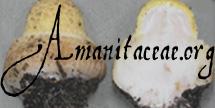
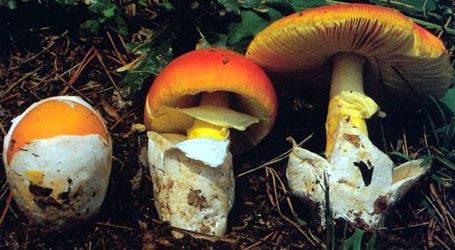

| name | cinereopannosa sensu M. S. Yuan |
| name status | sensu |
| english name | "Yuan's Asian Gray Rags Lepidella" |
| intro | The following is based in part on the revision of this probably distinct species by Yang (1997). |
| cap | The fruiting body of A. cinereopannosa sensu M. S. Yuan is medium-sized to large. The cap is 80 - 150 mm wide, convex to applanate, and generally grayish, but brownish at the center. The volval remnants on the cap are felty to floccose, and grayish to gray to dark gray or brownish. The cap's margin is appendiculate and non-striate; its flesh is white. |
| gills | The gills are free, white, crowded; the short gills are attenuate, plentiful. |
| stem | The stem is 10-15 × 1.5-2.0 cm, subcylindrical or slightly tapering upward, solid, white, middle part with fibrillose squamules; apical part with farinose squamules; its context is white; the basal bulb is subclavate to ventricose, 2.5-3 cm wide. The volval remnants are as gary to grayish farinose to felty patches near apex of bulb, forming a short limb. The annulus is subapical, white, thin, membranous, easily broken and fugacious. |
| odor/taste | The odor is indistinct. |
| spores | The spores of this taxon measure (10.0-) 10.5 - 13.5 (-14.5) × (6.5-) 7.0 - 8.5 (-9.0) µm and are ellipsoid to long ellipsoid and amyloid. Clamps are not present at the bases of basidia. |
| discussion |
Amanita cinereopannosa sensu M. S. Yuan is only known from southwestern China. This mushroom is similar to A. cinereopannosa Bas (1969), originally described from the eastern U.S.A. Amanita cinereopannosa differs from A. cinereopannosa sensu M. S. Yuan in its paler cap, paler volval remnants, and smaller spores. |
| brief editors | RET |
| name | cinereopannosa sensu M. S. Yuan | ||||||||||||||||||||
| author | sensu M. S. Yuan | ||||||||||||||||||||
| name status | sensu | ||||||||||||||||||||
| english name | "Yuan's Asian Gray Rags Lepidella" | ||||||||||||||||||||
| GenBank nos. |
Due to delays in data processing at GenBank, some accession numbers may lead to unreleased (pending) pages.
These pages will eventually be made live, so try again later. Search:
Showing 0 to 0 of 0 entries | ||||||||||||||||||||
| intro |
NOTE: Spore measurements from papers by Z. L. Yang use his "Times New Roman" face for "Q"
and "Q'"—respectively, " | ||||||||||||||||||||
| basidiospores |
from Yang (1997): [60/2/1] (10.0-) 10.5 - 13.5 (-14.5) × (6.5-) 7.0 - 8.5 (-9.0) μm, ( | ||||||||||||||||||||
| ecology | In small groups. China: At about 2700 m elev. In forest. | ||||||||||||||||||||
| material examined | CHINA: SICHUAN—Ngawa Tibetan and Qiang Autonomous Prefecture - Barkam [Maerkang] Co., Dawei, 21.vii.1991 M. S. Yuan 1416 (HKAS 24933). | ||||||||||||||||||||
| editors | RET | ||||||||||||||||||||
Information to support the viewer in reading the content of "technical" tabs can be found here.
 Spore data sets and their composite
Each spore data set is intended to comprise a set of measurements from a single specimen made by a single observer; and explanations prepared for this site talk about specimen-observer pairs associated with each data set. Combining more data into a single data set is non-optimal because it obscures observer differences (which may be valuable for instructional purposes, for example) and may obscure instances in which a single collection inadvertently contains a mixture of taxa.
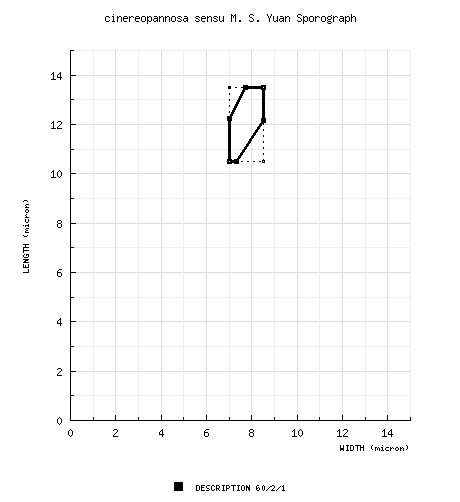

Text and User-Generated Sporographs are published under the Creative Commons License.

In the case of a taxon page, image credits are on the 'image' tab.