Amanita arizonica has been found in the U.S. in Cochise County, Arizona, where some of the associated plants were Arizona Cypress, Pine, Oak, Walnut, and Century Plant.—R. E. Tulloss
brief editors
RET
name
Amanita arizonica
author
A. H. Smith nom. prov.
name status
nomen provisorum
english name
"Arizona Lepidella"
GenBank nos.
Due to delays in data processing at GenBank, some accession numbers may lead to unreleased (pending) pages.
These pages will eventually be made live, so try again later.
Search:
accession
locus
voucher
source
No data available in table
Showing 0 to 0 of 0 entries
intro
Olive text indicates a specimen that has not been
thoroughly examined (for example, for microscopic details) and marks other places in the text
where data is missing or uncertain.
The following material is based on original research of R. E. Tulloss.
odor/taste
not recorded.
macrochemical tests
none recorded.
basidiospores
per notes of A. H. Smith: “8 - 11 × 5 - 6 µm, [(est. Q = 1.75),] amyloid.” [Note: No sporograph can be generated from this limited data.—ed.]
ecology
Solitary. At ?? m elev. Under Cupressus arizonica, Pinus engelmannii, Quercus, Juglans major, and Agave deserti.
material examined
U.S.A.:
ARIZONA—Cochise Co. - ca. Portal, S fork of Cave Crk. 17.viii.1958 J. L. Lowe & Robert L. Gilbertson s.n. (MICH).
discussion
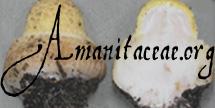
The whole specimen in the 17.viii.1958 collection
suggests Amanita
cokeri (E.-J. Gilbert & Kühn.) E.-J. Gilbert,
but the spores are too small for that species or for the
related A. subcokeri.
Each spore data set is intended to comprise a set of measurements from a single specimen made by a single observer;
and explanations prepared for this site talk about specimen-observer pairs associated with each data set.
Combining more data into a single data set is non-optimal because it obscures observer differences
(which may be valuable for instructional purposes, for example) and may obscure instances in which
a single collection inadvertently contains a mixture of taxa.



 Spore data sets and their composite