For the present, please see the technical tab for
developing data on this species.
discussion
—R. E. Tulloss and C. Rodríguez Caycedo
brief editors
RET
name
Limacella sp-L-PAN01
author
Tulloss & Rodríguez Caycedo
name status
cryptonomen temporarium
GenBank nos.
Due to delays in data processing at GenBank, some accession numbers may lead to unreleased (pending) pages.
These pages will eventually be made live, so try again later.
Search:
accession
locus
voucher
source
No data available in table
Showing 0 to 0 of 0 entries
intro
Olive text indicates a specimen that has not been
thoroughly examined (for example, for microscopic details) and marks other places in the text
where data is missing or uncertain.
The following material is based on original research of R. E. Tulloss and C. Rodríguez Caycedo.
odor/taste
not recorded.
macrochemical tests
none recorded.
pileus context
??; clamps common.
gluten layer
On pileus: gluten supporting hyphae collapsing with age, probably originally with anticlinal orientation, in poor condition in mature material reviewed, branching; tip cells uninflated, cylindric or slightly narrowing upward or downward, 1.5 - 4.5 μm wide at broadest point near tip, 2.0 - 3.0 μm wide at septum, 22 - 50 × 3.2 - 4.5 μm (length:width-near-tip ratio = 4.9 - 12.5); clamps abundant.
stipe context
longitudinally acrophysalidic; filamentous undifferentiated hyphae densely packed and dominating exclusively near stipe surface, 1.9 - 7.6 μm wide, branching, on lower stipe gelatinized to depth of ca. 2 hyphal diams.; acrophysalides absent near surface, plentiful away from surface, ?? × ?? μm, ??; clamps common.
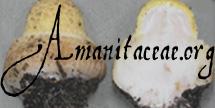
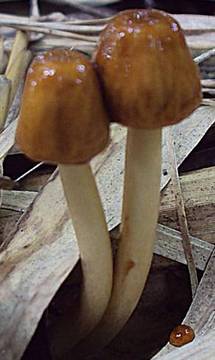
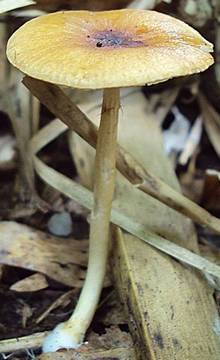
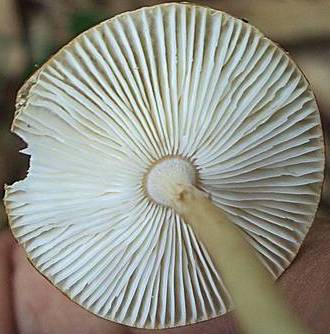
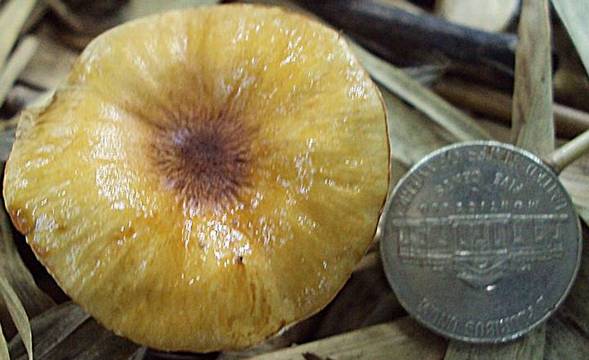
Eduardo A. Esquivel Rios - (1-4) Provincia de Panamá, Panamá. [Note: Originals of the photographs used on this page can be viewed at http://www.mushroomobserver.org/93692.]
name
Limacella sp-L-PAN01
name
Limacella sp-L-PAN01
Spore data for collections provisionally identified as: Limacella sp-L-PAN01
Each spore data set is intended to comprise a set of measurements from a single specimen made by a single observer;
and explanations prepared for this site talk about specimen-observer pairs associated with each data set.
Combining more data into a single data set is non-optimal because it obscures observer differences
(which may be valuable for instructional purposes, for example) and may obscure instances in which
a single collection inadvertently contains a mixture of taxa.




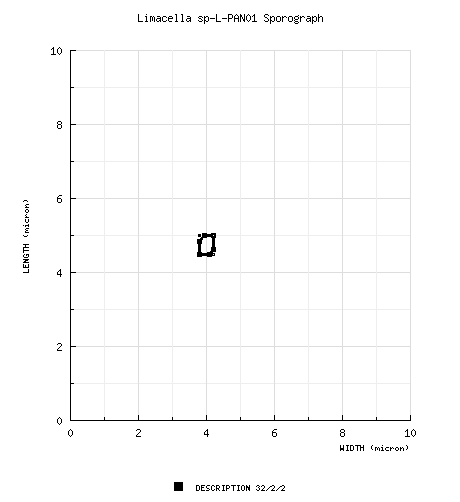
 Spore data sets and their composite