
| name | Limacella quilonensis | ||||||||||||||||||||
| author | A. V. Sathe & Jeys. Daniel. 1981. Agaricales SW India: 86, fig. 10. | ||||||||||||||||||||
| name status | insufficiently known | ||||||||||||||||||||
| english name | "Quilon Slimy Stem" | ||||||||||||||||||||
| MycoBank nos. | 115527 | ||||||||||||||||||||
| GenBank nos. |
Due to delays in data processing at GenBank, some accession numbers may lead to unreleased (pending) pages.
These pages will eventually be made live, so try again later. Search:
Showing 0 to 0 of 0 entries | ||||||||||||||||||||
| holotypes | AMH 4509 | ||||||||||||||||||||
| intro |
The following text may make multiple use of each data field. The field may contain magenta text presenting data from a type study and/or revision of other original material cited in the protolog of the present taxon. Macroscopic descriptions in magenta are a combination of data from the protolog and additional observations made on the exiccata during revision of the cited original material. The same field may also contain black text, which is data from a revision of the present taxon (including non-type material and/or material not cited in the protolog). Paragraphs of black text will be labeled if further subdivision of this text is appropriate. Olive text indicates a specimen that has not been thoroughly examined (for example, for microscopic details) and marks other places in the text where data is missing or uncertain. The following material is based entirely on the protolog of the present species. | ||||||||||||||||||||
| pileus | from protolog: 50 -90 mm wide, white, becoming pale yellow with age, globose at first, then hemispheric, becoming convex with age, glutinous and sticky; context white to pale yellow, 12 mm thick, fleshy, not confluent with stipe; margin entire, non-striate, slightly inflexed when young, becoming plane with age, ?appendiculate; gluten layer ?colorless. | ||||||||||||||||||||
| lamellae | from protolog: adnexed, distant, white turning to cream with age, ?fleshy, 7 - 9 mm broad, with ?serrate edge; lamellulae in at least three "sets." | ||||||||||||||||||||
| stipe | from protolog: 120 - 140 × 12 - 15 mm, white turning to pale yellow with age, cylindric, glutinous and sticky; bulb up to 20 mm wide; context fleshy, solid; partial veil membranous, white, superior; gluten layer ?colorless. | ||||||||||||||||||||
| odor/taste | from protolog: Odor nauseating, rotten. Taste not recorded. | ||||||||||||||||||||
| macrochemical tests |
none recorded. | ||||||||||||||||||||
| pileipellis | absent. | ||||||||||||||||||||
| pileus context | from protolog filamentous hyphae thin-walled hyaline, branched, 4.0 - 21.0 µm wide; clamps plentiful. [Note: Since the protolog does not mention acrophysalides or inflated cells in this tissue, it is possible that widths of acrophysalides or vascular hyphae are included in the above dimension range.—ed.] | ||||||||||||||||||||
| lamella trama | from protolog: bilateral in young specimen becoming slightly irregular with age; filamentous hyphae 3.5 - 6.0 µm wide, branched, thin-walled, hyaline; inflated cells to 15.5 μm wide, ?intercalary; clamps plentiful. | ||||||||||||||||||||
| subhymenium | from protolog: cellular, "poorly developed." | ||||||||||||||||||||
| basidia | from protolog: 42 - 54 × 12.0 - 14.5 μm, 4-sterigmate, clavate, cyanophilic, with sterigmata 3.5 - 6.0 μm long; clamps plentiful. | ||||||||||||||||||||
| gluten layer | from protolog: On pileus: elements erect; filamentous hyphae hyaline, thin-walled; clamps plentiful. | ||||||||||||||||||||
| stipe context | from protolog: filamentous hyphae thin-walled, hyaline, 5.0 - 26.5 µm wide; clamps plentiful. [Note: Since the protolog does not mention acrophysalides or inflated cells in this tissue, it is possible that widths of acrophysalides or vascular hyphae are included in the above dimension range.—ed.] | ||||||||||||||||||||
| partial veil | not described. | ||||||||||||||||||||
| lamella edge tissue | from protolog: fertile. | ||||||||||||||||||||
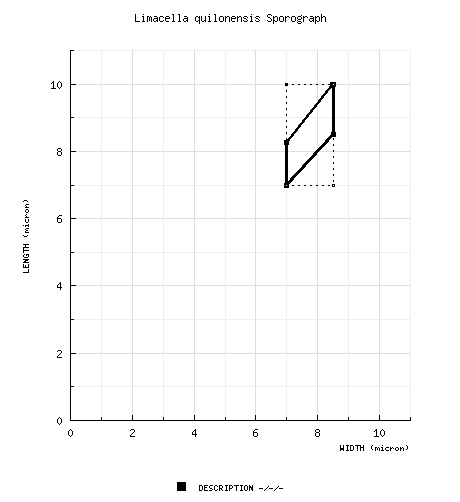
| basidiospores | from protolog: [-/-/-] 7.0 - 10.0 × 7.0 - 8.5 μm, (L = 8.5 μm; W = 7.5 μm; est. Q = 1.0 - 1.18; Q = 1.10), hyaline, [colorless,] smooth, thin-walled, cyanophilic, weakly dextrinoid; apiculus "central" [undoubtedly an error—ed.]; contents not reported; white in deposit. | ||||||||||||||||||||
| ecology | Solitary. On soil. | ||||||||||||||||||||
| material examined |
INDIA: KERALA—Quilon, | ||||||||||||||||||||
| discussion |
While it does seem probable that the species described above belongs in Limacella sect. Lubricae, strictly speaking, the information provided in the protolog does not establish that this species belongs in the Amanitaceae—acrophysalidic tissues are not mentioned. The form of the "trichodermial palisade" illustrated in the protolog is not suggested by the text which says simply, "epicutis of erect, hyaline and thin walled hyphae." The cells in the illustration could be described as a "chain" of two narrowly ventricose cells. This suggests a similarity to the cells in the volva of Amanita subsect. Vittadiniae—the most basal group in the genus Amanita. It will be very important to revise the type if it is in sufficiently good condition. The spores of this species are by far the largest of any reported from sect. Lubricae. It will be important to review any material of this species that may exist. | ||||||||||||||||||||
| citations | —R. E. Tulloss | ||||||||||||||||||||
| editors | RET | ||||||||||||||||||||
Information to support the viewer in reading the content of "technical" tabs can be found here.
 Spore data sets and their composite
Each spore data set is intended to comprise a set of measurements from a single specimen made by a single observer; and explanations prepared for this site talk about specimen-observer pairs associated with each data set. Combining more data into a single data set is non-optimal because it obscures observer differences (which may be valuable for instructional purposes, for example) and may obscure instances in which a single collection inadvertently contains a mixture of taxa.

Text and User-Generated Sporographs are published under the Creative Commons License.

In the case of a taxon page, image credits are on the 'image' tab.