
| name | Amanita sp-SAfr02 | ||||||||||||||||||||||||||||||||||||||||||||||||||||||||||||||||||||||||
| author | Tulloss, K. W. Hughes, M. K. Tulloss, Geml, & Kudzma | ||||||||||||||||||||||||||||||||||||||||||||||||||||||||||||||||||||||||
| name status | cryptonomen temporarium | ||||||||||||||||||||||||||||||||||||||||||||||||||||||||||||||||||||||||
| english name | "Wandering Blusher" | ||||||||||||||||||||||||||||||||||||||||||||||||||||||||||||||||||||||||
| GenBank nos. |
Due to delays in data processing at GenBank, some accession numbers may lead to unreleased (pending) pages.
These pages will eventually be made live, so try again later. Search:
Showing 1 to 14 of 14 entries | ||||||||||||||||||||||||||||||||||||||||||||||||||||||||||||||||||||||||
| lamella edge tissue | sterile. | ||||||||||||||||||||||||||||||||||||||||||||||||||||||||||||||||||||||||
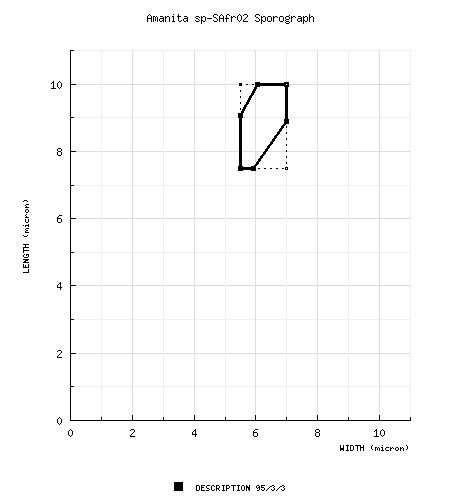
| basidiospores | [95/3/3] (7.0-) 7.5 - 10.0 (-11.2) × (4.9-) 5.5 - 7.0 (-8.3) μm, (L = 8.4- 9.2 μm; L' = 8.7 μm; W = 5.9 - 6.3 μm; W' = 6.1 μm; Q = (1.19-) 1.27 - 1.65 (-1.69); Q = 1.32 - 1.52; Q' = 1.43), hyaline, colorless, thin-walled, smooth, amyloid, broadly ellipsoid to ellipsoid, infrequently elongate, adaxially flattened; apiculus sublateral, cylindric, proportionately small; contents granular to mono- or multiguttulate with or without additional small granules; white in deposit. | ||||||||||||||||||||||||||||||||||||||||||||||||||||||||||||||||||||||||
| ecology | Norway: on fairly dry, dark soil under Alnus glutinosa, Populus tremula, with one Picea abies. South Africa: Growing with introduced (North American) Quercus palustris. | ||||||||||||||||||||||||||||||||||||||||||||||||||||||||||||||||||||||||
| material examined |
NORWAY: OSTFOLD—Viken,
Fredrikstad, Torsnes, ca. Skremmelia, 19.ix.2019
Øyvind Weholt 68-19 (RET
881-7, nrITS seq'd.).
SOUTH AFRICA:
GUATENG—City of Tshwane - Pretoria,
| ||||||||||||||||||||||||||||||||||||||||||||||||||||||||||||||||||||||||
| discussion |
While the Roosevelt herbariium encocuntered this
species first in the cited material sent to us over
the years from South Africa, it seems likely that
the species is native to the northern Hemisphere
because its sequences have been posted
to GenBank from several locations in northern and southern
Europe and Quercus is not native to South
Africa. | ||||||||||||||||||||||||||||||||||||||||||||||||||||||||||||||||||||||||
| citations | —R. E. Tulloss | ||||||||||||||||||||||||||||||||||||||||||||||||||||||||||||||||||||||||
| editors | RET | ||||||||||||||||||||||||||||||||||||||||||||||||||||||||||||||||||||||||
Information to support the viewer in reading the content of "technical" tabs can be found here.

Text and User-Generated Sporographs are published under the Creative Commons License.

In the case of a taxon page, image credits are on the 'image' tab.