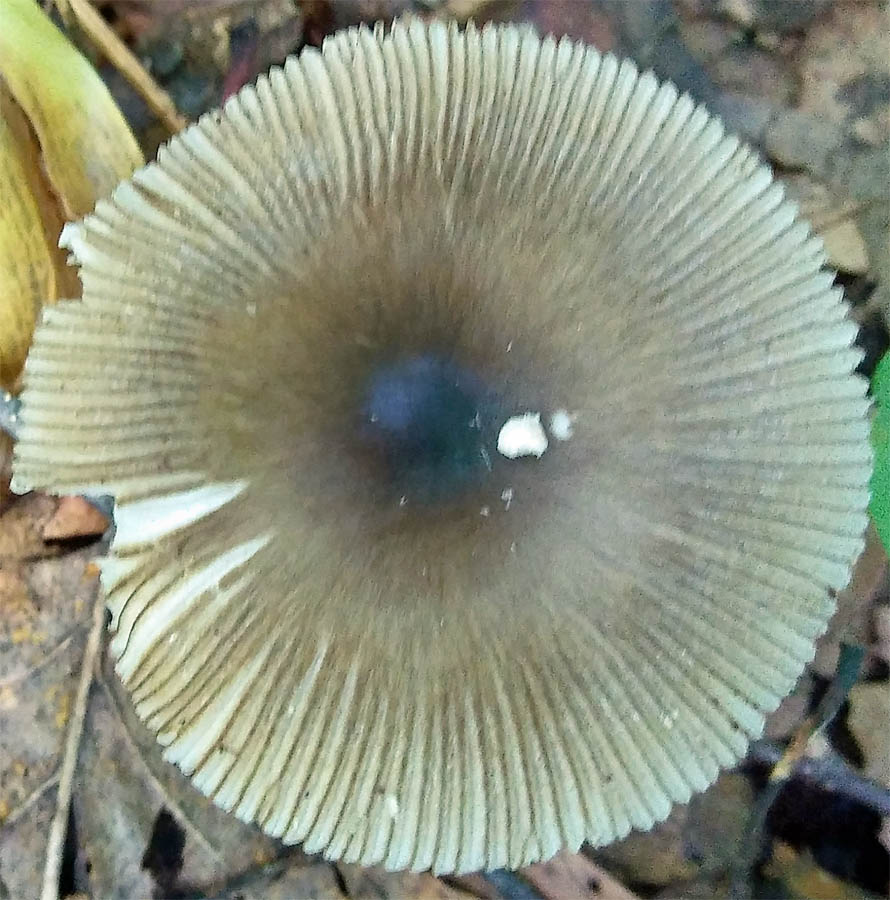
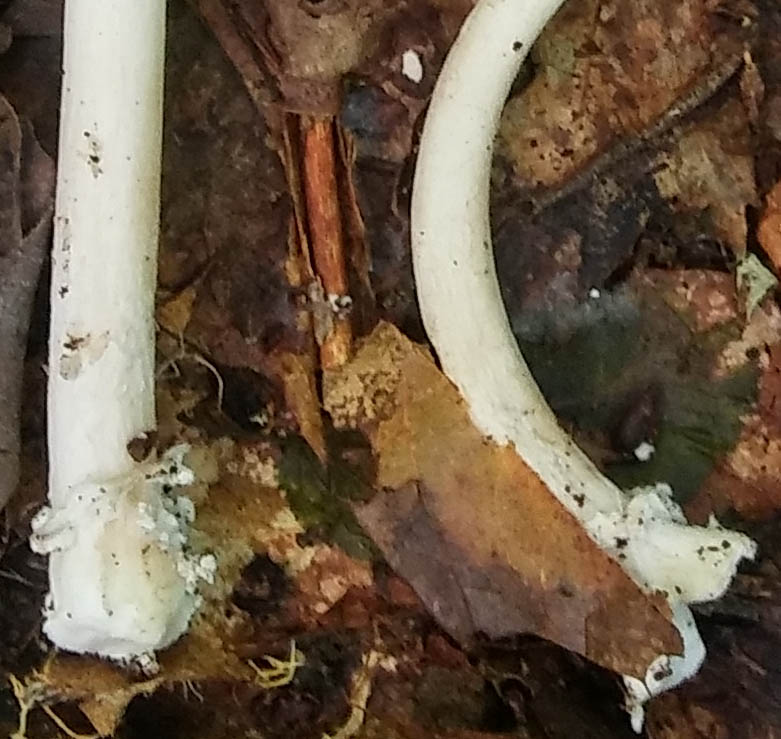
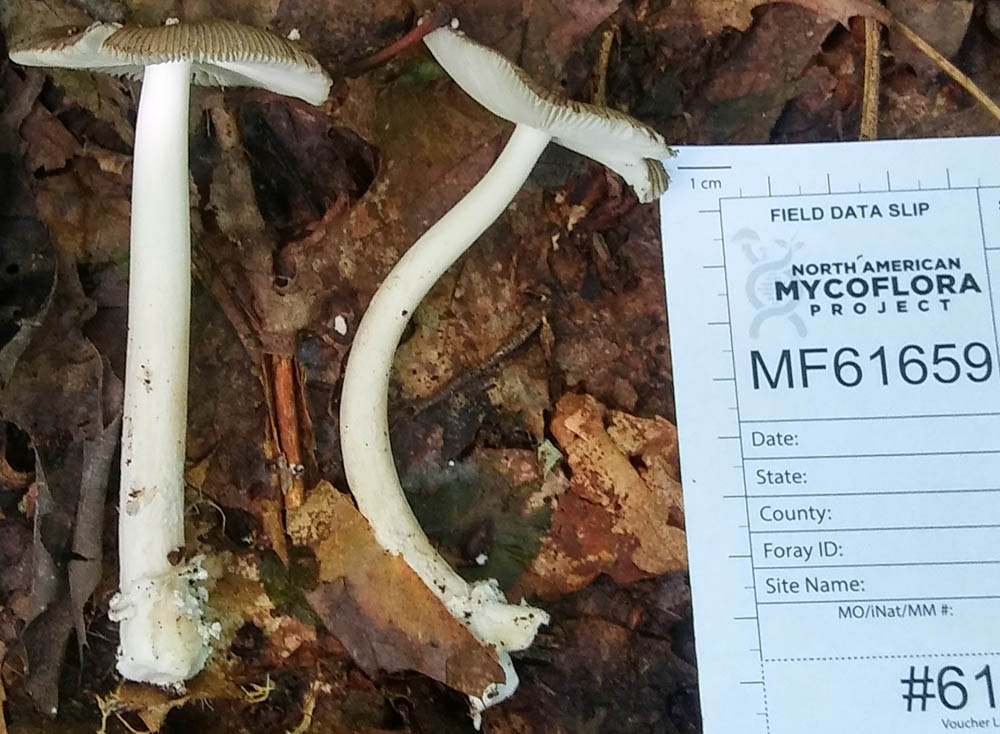
1. Amanita rhodinsulae, Smithfield, Providence County, Rhode Island, U.S.A. (RET 863-2)
2. Amanita rhodinsulae, Smithfield, Providence County, Rhode Island, U.S.A. (RET 863-2)
3. Amanita rhodinsulae, Smithfield, Providence County, Rhode Island, U.S.A. (RET 863-2)
intro
As data is collected it will appear first on the
technical tab of this pate.
discussion
—R. E. Tulloss
brief editors
RET
name
Amanita rhodinsulae
author
Tulloss & S. D. Russell
name status
nomen provisorum
etymology
The epithet is an elision of
Rhode/Rhodos/Rhodus/rhodo- +
insula (island) in the genitive.
The purpose is to reflect the history of the name of
the state of Rhode Island in the epithet.
The sources for rhodi-:
Rhode is a daughter of the god of the oceans who made
the island of Rhodes arise from the see.
She was also
called Rhodos, which is the name of the Island of Rhodes
in Greek.
In Botanical Latin the island was called Rhodus.
In Greek "rhodos" also means "rose." From this,
the botanical prefix
rhodo- gets the meaning "red."
One story of
the origin of the name "Rhode Island" is that it is
an English respelling of the name "Roodt Eylandt"
(meaning "Red Island" because of red cliffs rising
from the sea) given to the North American island by a
Netherlandish explorer named
Block for whom the original Rhode Island is now
named because the name had become part of the name
of a Colony, which is now a state.
The epithet is a portmanteau word in the
sense of Lewis Carroll.
GenBank nos.
Due to delays in data processing at GenBank, some accession numbers may lead to unreleased (pending) pages.
These pages will eventually be made live, so try again later.
In the closest 60 matches in GenBank as listed by the
BLAST program, the least genetic distances was
5.1%.
Despite being rather distant (5.6-7.8% genetic
distance) from amanitas such as
A. rhacopus, A. texasorora, and
A. xanthomitra, the present species has a
weakly structured universal veil that leaves rings
on the lower stipe.
The volva also seems to turn gray with age.
citations
—R. E. Tulloss
editors
RET
Information to support the viewer in reading the content of "technical" tabs
can be found here.
name
Amanita rhodinsulae
name status
nomen provisorum
author
Tulloss & S. D. Russell
images
1. Amanita rhodinsulae, Smithfield, Providence County, Rhode Island, U.S.A. (RET 863-2)
2. Amanita rhodinsulae, Smithfield, Providence County, Rhode Island, U.S.A. (RET 863-2)
3. Amanita rhodinsulae, Smithfield, Providence County, Rhode Island, U.S.A. (RET 863-2)
photo
Spike Mikulski - (1-3) Smithfield, Providence County,
Rhode Island. (RET 863-2) [Note:
Unedited and uncropped originals of images can be
found
here.—ed.]
name
Amanita rhodinsulae
name
Amanita rhodinsulae
no collection records available. Please create a collection record in order to enter spore measurements and derive sporograph from them. The form below will draw a sporograph based on data entered: