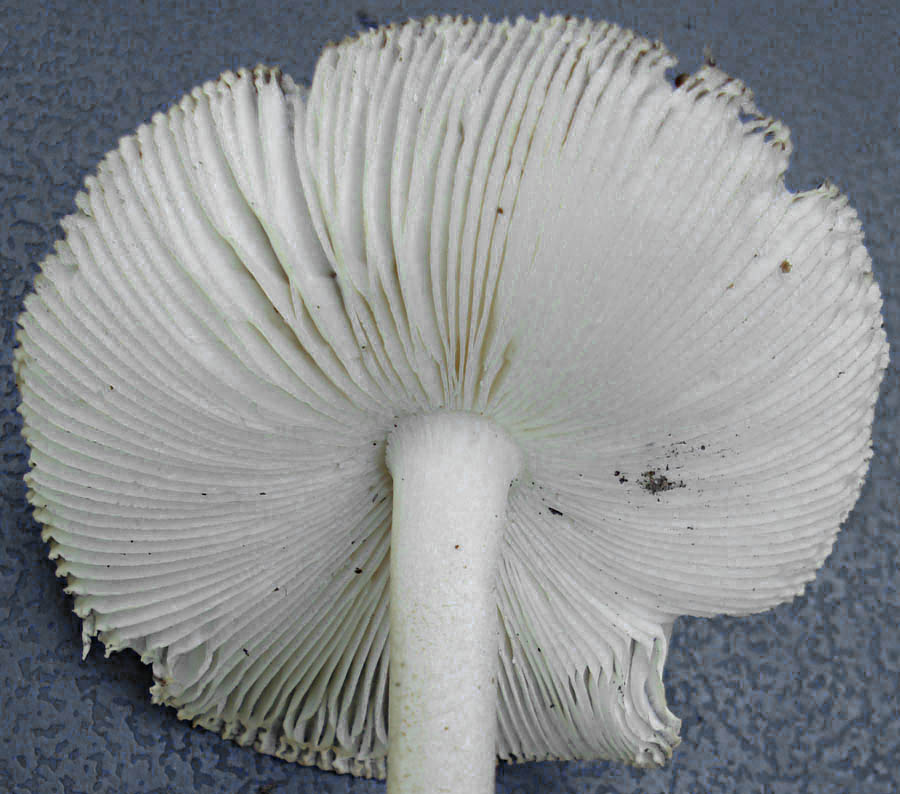
| name | Amanita glenosomma | ||||||||||||||||||||||||||||||||
| author | Tulloss & Kudzma | ||||||||||||||||||||||||||||||||
| name status | nomen provisorum | ||||||||||||||||||||||||||||||||
| english name | "Wondrous Eye Ringless Amanita" | ||||||||||||||||||||||||||||||||
| MycoBank nos. | double click in markup mode to edit. | ||||||||||||||||||||||||||||||||
| GenBank nos. |
Due to delays in data processing at GenBank, some accession numbers may lead to unreleased (pending) pages.
These pages will eventually be made live, so try again later. Search:
Showing 1 to 4 of 4 entries | ||||||||||||||||||||||||||||||||
| lamella edge tissue | sterile | ||||||||||||||||||||||||||||||||
| ecology | Solitary. At 360-370 m elev. In mixed forest with plentiful Quercus, locally plentiful Pinus strobus, Tsuga canadensis, Fraxinus, Carya ovata, etc. | ||||||||||||||||||||||||||||||||
| material examined | U.S.A.: PENNSYLVANIA—Luzerne Co. - Pikes Creek Reservoir [41.1663° N/ 76.0599° W, 360-370m] 17.viii.2011 David Wasilewski s.n. [mushroomobserver #74209] (RET 556-8, nrITS & nrLSU seq'd.). KENTUCKY—Greenup Co. - unkn. loc. [38.5652º N/ 82.9166º W, 226 m], 4.ix.2019 Kevin Moore s.n. [mushrooobserver #381157] (RET 879-6, nrITS seq'd.). TEXAS—Newton Co. - Bleakwood, Co. Rd. 3062, Lewis prop. [30.7085° N/ 93.8272° W, 37 m], 1.x.1009 David P. Lewis 9345 (RET 463-10). | ||||||||||||||||||||||||||||||||
| citations | —R. E. Tulloss | ||||||||||||||||||||||||||||||||
| editors | RET | ||||||||||||||||||||||||||||||||
Information to support the viewer in reading the content of "technical" tabs can be found here.
Spore data sets and their composite
Each spore data set is intended to comprise a set of measurements from a single specimen made by a single observer; and explanations prepared for this site talk about specimen-observer pairs associated with each data set. Combining more data into a single data set is non-optimal because it obscures observer differences (which may be valuable for instructional purposes, for example) and may obscure instances in which a single collection inadvertently contains a mixture of taxa.