
| name | Amanita fulva—North_American |
| name status | nomen acceptum |
| author | (Schaeff.) Fr. |
| english name | "Fulvous Ringless Amanita" |
| images |
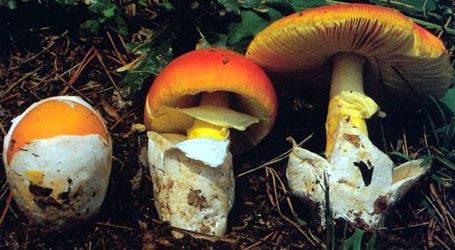
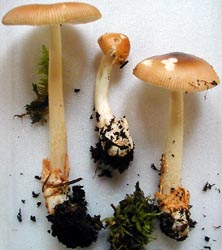 1. Amanita fulva, Province of Newfoundland and Labrador, Canada. 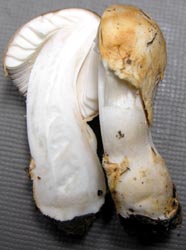 2. Amanita fulva, Province of Newfoundland and Labrador, Canada. 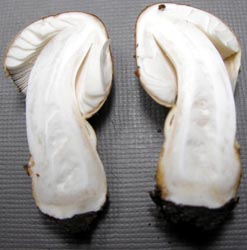 3. Amanita fulva, Province of Newfoundland and Labrador, Canada. 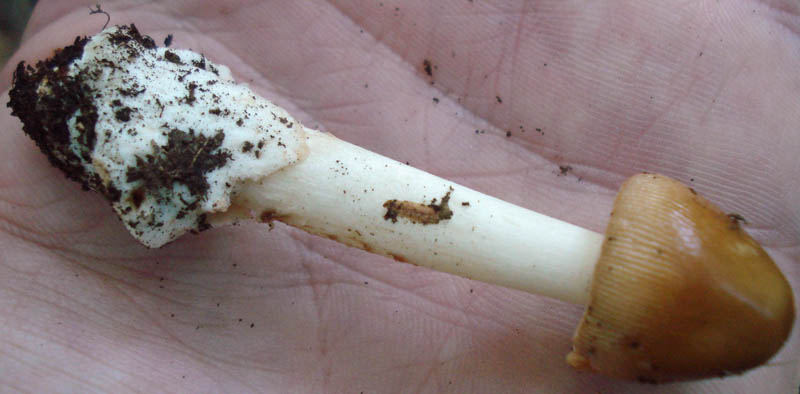  4. Amanita fulva, Pine Grove Furnace St. Pk., Cumberland Co., Pennsylvania, U.S.A. (RET 706-7) 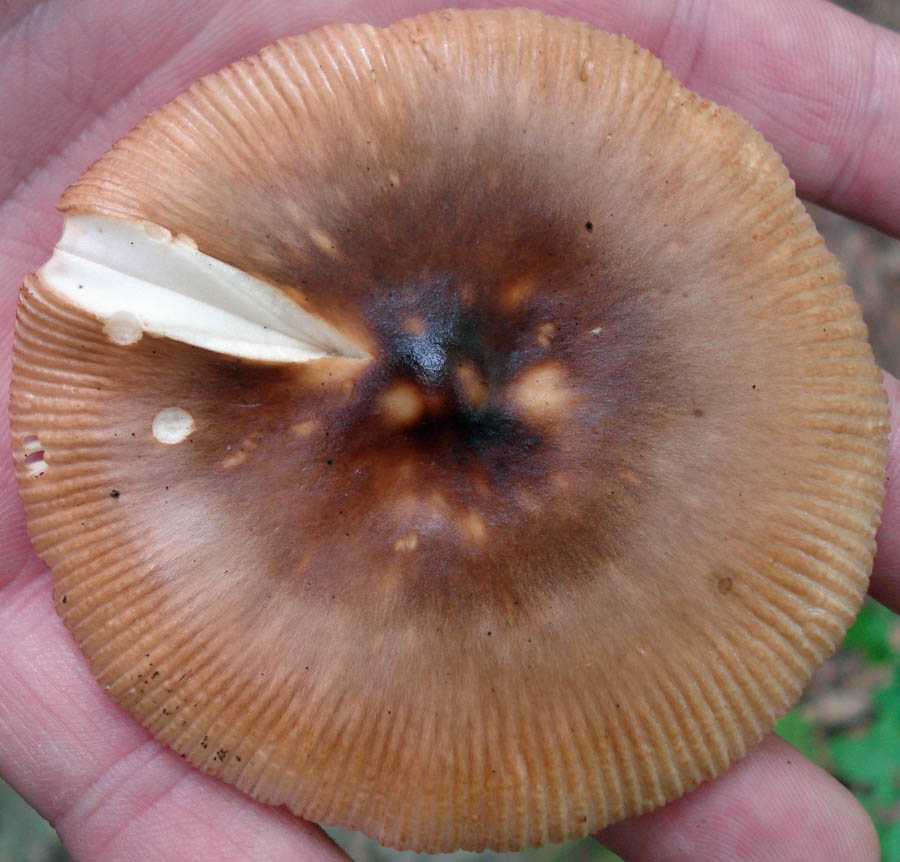 5. Amanita fulva, Seven Tubs Natural Area, Luzerne Co., Pennsylvania, U.S.A. (RET 706-3) |
| cap | The cap is 43 - 80 mm wide, more orange or orange-tan than fulvous except (often) in the center, with color saturation varying from pallid to moderately intense, becoming slightly sordid with age. Cap margin striate. Volva almost always absent from cap. |
| gills | The gills are free, close, pale orangish cream to cream in mass, white to off-white to cream (older material) in side view, not changing when cut or bruised, 5.5 - 6 mm broad. The short gills are truncate or truncate with attenuate tooth along underside of pileus or subtruncate or infrequently subattenuate, of diverse lengths, unevenly distributed, usually plentiful, but sometimes very sparse on some caps. |
| stem | The stem is entirely velvety (drying to satiny) or decorated with felted to flocculose fragments of anorangish white to orange, subfelted to felted, internal limb of the volva. This internal limb is attached to the exterior of the volva at the point at which the volva is attached to the stem. The exterior surface of the volva liable to intense red- or orange-brown staining. |
| spores | The spores measure (9.8-) 10.5 - 13.1 (-14.3) × (9.1-) 9.7 - 12.0 (-14.0) µm and are globose to subglobose (infrequently broadly ellipsoid) and inamyloid. Clamp information t.b.d. |
| discussion |
Presently known from the Providence of Newfoundland and Labrador, Canada, where it has been found both on the Island of Newfoundland and in southeastern Labrador with Abies balsamea and Betula papyrifera, sometimes with Picea glauca in addition. This species was formerly known in these pages as A. daimonioctantes in these pages; however, independent genetic studies by Dr. Landry (Mycol. Soc. Québec) and the present authors, have that the North American material is likely to belong this well-established species known from Eurasia. See also Amanita sp-NFL02 and Amanita sp-NFL08. Sometimes an accidental event in nature performs a very useful dissection on behalf of the taxonomist: In the images 2 and 3, above, much of the volval limb was pulled from the stem base during expansion of the fruiting body, one end of the limbus internus remained attached to the part of the limb that was ripped upward. In consequence, note the silky underside of the membrane that continues to connect a line on the inside of the displaced volva to a point at about midstipe (image 2). The upper side of the membranous connection (image 3) bears friable bits of orangish white limbus internus.—R. E. Tulloss and L. V. Kudzma |
| brief editors | RET |
| name | Amanita fulva—North_American | ||||||||||||||||||||||||||||||||||||||||||||||||||||||||||||||||||||||||||||||||||||||||||||||||||||||||||||||||||||||||||||||||||||||||||||||||||||||||||||||||||||||||||||||||||||||||||||||||||||||||||||||||||||||||||||||||||||||||||||||||||||||||||||||||||||||||||||||||||||||||||||
| author | (Schaeff.) Fr | ||||||||||||||||||||||||||||||||||||||||||||||||||||||||||||||||||||||||||||||||||||||||||||||||||||||||||||||||||||||||||||||||||||||||||||||||||||||||||||||||||||||||||||||||||||||||||||||||||||||||||||||||||||||||||||||||||||||||||||||||||||||||||||||||||||||||||||||||||||||||||||
| name status | nomen acceptum | ||||||||||||||||||||||||||||||||||||||||||||||||||||||||||||||||||||||||||||||||||||||||||||||||||||||||||||||||||||||||||||||||||||||||||||||||||||||||||||||||||||||||||||||||||||||||||||||||||||||||||||||||||||||||||||||||||||||||||||||||||||||||||||||||||||||||||||||||||||||||||||
| english name | "Fulvous Ringless Amanita" | ||||||||||||||||||||||||||||||||||||||||||||||||||||||||||||||||||||||||||||||||||||||||||||||||||||||||||||||||||||||||||||||||||||||||||||||||||||||||||||||||||||||||||||||||||||||||||||||||||||||||||||||||||||||||||||||||||||||||||||||||||||||||||||||||||||||||||||||||||||||||||||
| etymology | fulvus, fulvous, the color of the mane of a lion | ||||||||||||||||||||||||||||||||||||||||||||||||||||||||||||||||||||||||||||||||||||||||||||||||||||||||||||||||||||||||||||||||||||||||||||||||||||||||||||||||||||||||||||||||||||||||||||||||||||||||||||||||||||||||||||||||||||||||||||||||||||||||||||||||||||||||||||||||||||||||||||
| GenBank nos. |
Due to delays in data processing at GenBank, some accession numbers may lead to unreleased (pending) pages.
These pages will eventually be made live, so try again later. Search:
Showing 1 to 67 of 67 entries | ||||||||||||||||||||||||||||||||||||||||||||||||||||||||||||||||||||||||||||||||||||||||||||||||||||||||||||||||||||||||||||||||||||||||||||||||||||||||||||||||||||||||||||||||||||||||||||||||||||||||||||||||||||||||||||||||||||||||||||||||||||||||||||||||||||||||||||||||||||||||||||
| intro |
Olive text indicates a specimen that has not been
thoroughly examined (for example, for microscopic details) and marks other places in the text
where data is missing or uncertain. The following is based upon original research by R. E. Tulloss. | ||||||||||||||||||||||||||||||||||||||||||||||||||||||||||||||||||||||||||||||||||||||||||||||||||||||||||||||||||||||||||||||||||||||||||||||||||||||||||||||||||||||||||||||||||||||||||||||||||||||||||||||||||||||||||||||||||||||||||||||||||||||||||||||||||||||||||||||||||||||||||||
| pileus | 43 - 84 mm wide, pale orangish tan (Pale Ochraceus Buff to slightly browner than Ochraceus Buff, sometimes becoming sordid or faintly tinted with olivaceous after collecting, e.g., about 5B4) with disc concolorous or fulvous to red-brown to warm brown (paler than 8F8 or ca. 2.5YR 2.5/4 or ca. 7.5YR 3/4), with portion outside disc sometimes becoming pale sordid tan with age, with apparent tendency to decolor in sunlight, campanulate at first then plano-convex to planar, eventually with margin flaring upward, umbonate, shiny to subshiny to waxy when fresh, dull when dried in situ; context 3.5 - 4.5 mm thick, off-white, sometimes pale orangish-white under pileipellis, not changing when cut or bruised, narrowing to about 1 mm at mid-radius then evenly to margin or evenly for about two-thirds radius and then membranous to margin; margin striate (0.20R - 0.35R (-0.4R)), decurved, nonappendiculate; universal veil absent. | ||||||||||||||||||||||||||||||||||||||||||||||||||||||||||||||||||||||||||||||||||||||||||||||||||||||||||||||||||||||||||||||||||||||||||||||||||||||||||||||||||||||||||||||||||||||||||||||||||||||||||||||||||||||||||||||||||||||||||||||||||||||||||||||||||||||||||||||||||||||||||||
| lamellae | free, sometimes with faint decurrent line on stipe apex (10× lens), close, pale orangish cream to cream to tan with orangish tint in mass, white to off-white to cream (older material) in side view, not changing when cut or bruised, 5.5 - 7 mm broad, broadest at (0.5-) 0.8 of radius, palely marginate (pale orange to pale brownish to palely concolorous with pileus); lamellulae truncate (infrequently rounded truncate) or truncate with attenuate tooth along underside of pileus or subtruncate or infrequently subattenuate, sometimes at stipe as well as at pileus margin, of diverse lengths, unevenly distributed, usually plentiful, but sometimes absent for significant portion of pileus circumference (in Tulloss 10-1-03-A having only 8 lamellulae on entire pileus). | ||||||||||||||||||||||||||||||||||||||||||||||||||||||||||||||||||||||||||||||||||||||||||||||||||||||||||||||||||||||||||||||||||||||||||||||||||||||||||||||||||||||||||||||||||||||||||||||||||||||||||||||||||||||||||||||||||||||||||||||||||||||||||||||||||||||||||||||||||||||||||||
| stipe | 99 - 147 × 8.5 - 11.5 mm, if not entirely white, often white in upper 20± mm, otherwise palely concolorous with region of pileus excluding disc, pale orange to pale orange-brown, sometimes becoming slightly sordid from handling, narrowing upward, more or less flaring at apex, sometimes decorated with scattered raised fibrils after handling, sometimes with pale orange to pale orange-brown irregular pieces of limbus internus distributed over colored portion above volval limb, sometimes decorated with scattered raised fibrils after handling, sometimes with pale orange to pale orange-brown irregular pieces of limbus internus appressed to lower stipe above volva, eventually with felted region becoming satiny and longitudinally striatulate as in material originally lacking felted region; exannulate; context off-white, not changing when cut or bruised, stuffed with densely packed white fibrillose material (not notably longitudinally oriented, at least in upper third of stipe) or stuffed in upper third and hollow below or hollow with sparse cottony cross-walls in otherwise hollow parts, with central cylinder 4 - 5.5 mm wide, with insect damaged areas absent or concolorous or (rarely) orange-brown in upper central cylinder (Tulloss 8-30-97-D); universal veil as saccate volva, membranous, with smooth surfaces (rarely with dimpled area of upper external surface of limb), white with rusty spots or stains (sometimes extensive) on exterior surface, pale orangish white to pale fulvus on inner surface, 28 - 38 × 13 - 17 mm, < 1 mm thick at midpoint between top and point of attachment to stipe, eventually collapsing on stipe, having pronounced felted cream to pale orangish cream limbus internus [markedly elongate (up to 4.5± mm long), markedly thickened, or both] with upper edge becoming more distinctly orange in older material. | ||||||||||||||||||||||||||||||||||||||||||||||||||||||||||||||||||||||||||||||||||||||||||||||||||||||||||||||||||||||||||||||||||||||||||||||||||||||||||||||||||||||||||||||||||||||||||||||||||||||||||||||||||||||||||||||||||||||||||||||||||||||||||||||||||||||||||||||||||||||||||||
| odor/taste | Odor not notable or faintly fungal; tasteless with a crisp texture. | ||||||||||||||||||||||||||||||||||||||||||||||||||||||||||||||||||||||||||||||||||||||||||||||||||||||||||||||||||||||||||||||||||||||||||||||||||||||||||||||||||||||||||||||||||||||||||||||||||||||||||||||||||||||||||||||||||||||||||||||||||||||||||||||||||||||||||||||||||||||||||||
| macrochemical tests |
Syringaldazine spot test for laccase - immediately positive strongly on exterior of volval sac (soon fading and gone in 5 minutes), immediately weakly positive in narrow horizontal layer 1 -2 mm above stipe base (slowly fading, persisting for 14-15 min.), strongly positive in dot at very base of stipe after 10-11 min (stil strongly persisting after 9 min., strong dot on exterior of sac appearing after 12-13 min. (fading nearly completely after 6 min.). Voucher for macrochemical tests: Tulloss 9-3-05-E. | ||||||||||||||||||||||||||||||||||||||||||||||||||||||||||||||||||||||||||||||||||||||||||||||||||||||||||||||||||||||||||||||||||||||||||||||||||||||||||||||||||||||||||||||||||||||||||||||||||||||||||||||||||||||||||||||||||||||||||||||||||||||||||||||||||||||||||||||||||||||||||||
| pileipellis | 140 - 145 µm thick at mid-radius; suprapellis colorless and gelatinized at surface, 25 - 35 µm thick; subpellis ungelatinized, orange to brownish orange, 105 - 120 µm thick; filamentous, undifferentiated hyphae 2.4 - 15.2 µm wide, loosely interwoven (pileus context sometimes visible in gaps at mid-radius, not so over disc) and irregularly oriented mixed with subradially oriented hyphae (in mass or in distinct fascicles), branching, sometimes constricted at septa, sometimes with narrowly clavate tip cells; vascular hyphae 2.1 - 10.5 µm wide, sinuous, sordid yellow, scattered, rather common, often appearing ungelatinized in suprapellis. | ||||||||||||||||||||||||||||||||||||||||||||||||||||||||||||||||||||||||||||||||||||||||||||||||||||||||||||||||||||||||||||||||||||||||||||||||||||||||||||||||||||||||||||||||||||||||||||||||||||||||||||||||||||||||||||||||||||||||||||||||||||||||||||||||||||||||||||||||||||||||||||
| subhymenium | cellular. | ||||||||||||||||||||||||||||||||||||||||||||||||||||||||||||||||||||||||||||||||||||||||||||||||||||||||||||||||||||||||||||||||||||||||||||||||||||||||||||||||||||||||||||||||||||||||||||||||||||||||||||||||||||||||||||||||||||||||||||||||||||||||||||||||||||||||||||||||||||||||||||
| basidia | BASIDIA: 51 - 75 × 15.0 - 16.0 µm, dominantly 4-, infrequently 2-sterimate, with sterigmata up to 9.2 × 4.6 µm; clamps ??probably absent??. | ||||||||||||||||||||||||||||||||||||||||||||||||||||||||||||||||||||||||||||||||||||||||||||||||||||||||||||||||||||||||||||||||||||||||||||||||||||||||||||||||||||||||||||||||||||||||||||||||||||||||||||||||||||||||||||||||||||||||||||||||||||||||||||||||||||||||||||||||||||||||||||
| universal veil | On pileus: absent. At stipe base exterior surface layer: ??. At stipe base, interior: filamentous undifferenitated hyphae ??; inflated cells with walls up to 1.4 mm thick, ??; vascular hyphae ??; clamps absent. At stipe base, inner surface layer: ??. | ||||||||||||||||||||||||||||||||||||||||||||||||||||||||||||||||||||||||||||||||||||||||||||||||||||||||||||||||||||||||||||||||||||||||||||||||||||||||||||||||||||||||||||||||||||||||||||||||||||||||||||||||||||||||||||||||||||||||||||||||||||||||||||||||||||||||||||||||||||||||||||
| stipe context | STIPE CONTEXT: longitudinally acrophysalidic; filamentous undifferentiated hyphae 2.4 - 5.2 µm wide, plentiful to dominant in interior, dominant at surface, dominantly longitudinally oriented, ??; acrophysalides up to 120± × 26 µm, common in interior, infrequent near surface, thin-walled, ??; vascular hyphae 3.8 - 12.6 µm wide, locally common although generally scattered, subsinuous. | ||||||||||||||||||||||||||||||||||||||||||||||||||||||||||||||||||||||||||||||||||||||||||||||||||||||||||||||||||||||||||||||||||||||||||||||||||||||||||||||||||||||||||||||||||||||||||||||||||||||||||||||||||||||||||||||||||||||||||||||||||||||||||||||||||||||||||||||||||||||||||||
| partial veil | absent. | ||||||||||||||||||||||||||||||||||||||||||||||||||||||||||||||||||||||||||||||||||||||||||||||||||||||||||||||||||||||||||||||||||||||||||||||||||||||||||||||||||||||||||||||||||||||||||||||||||||||||||||||||||||||||||||||||||||||||||||||||||||||||||||||||||||||||||||||||||||||||||||
| lamella edge tissue | inflated cells globose to subglobose to pyriform to broadly clavate to clavate, up to 43 × 22 µm, thin-walled, becoming gelatinized with age, in up to five layers below a fascicle of filamentous undifferentiated hyphae running along gill edge. | ||||||||||||||||||||||||||||||||||||||||||||||||||||||||||||||||||||||||||||||||||||||||||||||||||||||||||||||||||||||||||||||||||||||||||||||||||||||||||||||||||||||||||||||||||||||||||||||||||||||||||||||||||||||||||||||||||||||||||||||||||||||||||||||||||||||||||||||||||||||||||||
| basidiospores | [75/4/4] 9.8 - 13.0 (-14.3) × (8.4-) 9.1 - 12.0 (-14.0) µm, (L = 10.7 - 12.0 µm; L’ = 11.4 µm; W = 9.8 - 11.1 µm; W’ = 10.5 µm; Q = (1.02-) 1.05 - 1.14 (-1.21); Q = 1.07 - 1.10; Q’ = 1.08), hyaline, colorless, smooth, thin-walled, inamyloid, adaxially flattened, globose to subglobose; apiculus sublateral, cylindric, sometimes proportionately rather large; contents mono- to multiguttulate; color in deposit unknown. | ||||||||||||||||||||||||||||||||||||||||||||||||||||||||||||||||||||||||||||||||||||||||||||||||||||||||||||||||||||||||||||||||||||||||||||||||||||||||||||||||||||||||||||||||||||||||||||||||||||||||||||||||||||||||||||||||||||||||||||||||||||||||||||||||||||||||||||||||||||||||||||
| ecology |
Scattered to solitary, sometimes in small
clusters. Canada,Island of Newfoundland: In moss-covered wet loam and duff in forests of Abies balsamea and Betula papyrifera, and sometimes with Picea glauca in addition. Proportions of these trees vary from site to site. U.S.A.: At 8 - 1590 m elev. Connecticut: Solitary. In dark loam and leaf litter of mixed woods including Quercus, Acer, Tsuga canadensis, and Pinus. Louisiana: With Quercus. North Carolina: In mixed hardwoods (Quercus, Liriodendron tulipifera, Carya, Acer, Fagus grandifolia, and Liquidambar styraciflus) with Pinus taeda. Pennsylvania: In mixed forest with Betula, Quercus, and Tsuga canadensis. Vermont: in mixed woods dominated by Betula, Acer, Fraxinus, and T. canadensis. | ||||||||||||||||||||||||||||||||||||||||||||||||||||||||||||||||||||||||||||||||||||||||||||||||||||||||||||||||||||||||||||||||||||||||||||||||||||||||||||||||||||||||||||||||||||||||||||||||||||||||||||||||||||||||||||||||||||||||||||||||||||||||||||||||||||||||||||||||||||||||||||
| material examined |
CANADA: NEWFOUNDLAND &
LABRADOR—Isl. of Newfoundland -
Baker’s Brook
Falls Tr., 3.ix.2005 Newfoundland foray participant
s.n. [Tulloss 9-3-05-E] (RET 389-2, nrITS seq'd.);
Corner Brook, Humber Village, Voitk prop.,
5.ix.2003 Andrus Voitk s.n. (RET 372-2,
nrITS seq'd.).
Gros Morne Nat. Pk., Berry Head Pond Tr., 31.xiii.2005 Vello Soots
& Pat Burchell s.n. [Tulloss 8-31-05-A]
(RET 388-10);
GMNP, lower Green Garden Tr., 29.viii.2003 Andrus
Voitk s.n. (RET 372-1, nrITS seq'd.), Andrus Voitk
s.n. (RET 371-9, nrITS-LSU seq'd.).
GMNP, Killdevil Anglican Church Camp, near lab,
19.ix.2004 Noah Siegel & R. E. Tulloss [Tulloss
9-19-04-A] (RET 384-2);
GMNP, Killdevil Anglican Church Camp,
tr. to Lomond R. [49.4481° N/ 57.7519° W, 29 m],
1.x.2003 K. Kalaméés s.n. [Tulloss 10-1-03-A]
(RET 371-3, nrITS & nrLSU seq'd.);
GMNP,
Stanleyville, tr. from Lomond R. picnic area,
13.ix.2004 R. E. Tulloss 9-13-04-C (RET 383-8,
nrITS & nrLSU seq'd.); GMNP, Southeast Brook,
0.5 km off Rte. 431, 3.ix.2005 B. Sparling s.n. (RET
388-2, nrLSU seq'd.); GMNP, Stuckless Pond Tr.,
15.ix.2004 Maria Voitk s.n. [Tulloss 9-15-04-B]
(RET 384-4, nrITS seq'd.); GMNP, Western Brook Pond, 27.ix.2003 Andrus
Voitk s.n. [Tulloss 9-27-03-B] (RET 370-8, nrITS
& nrLSU seq'd.); GMNP, Western Brook Pond
Tr., at crossroads, 16.ix.2004 Maria Voitk &
Judy May s.n. [Tulloss 9-16-04-A] (RET
??); GMNP, unkn. loc., 19.ix.2004 Noah
Siegel s.n. (RET 625-6, nrITS seq'd.). St.
John Island, 4.viii.2003 Andrus Voitk #2
(RET 369-3, nrIT-LSU seq'd.).
Labrador - Labrador Straits area, Newfoundland
& Labrador Foray 2005 walk #8, 8.ix.2005 M.
Wright s.n. [Tulloss 9-8-05-A] (RET 387-3).
NEW BRUNSWICK—Charlotte Co. -
Campobello Isl., woods on tr. to Liberty Pt.
[44.8308º N/ 66.9308º W, 21 m], 24.ix.2016 Michaeline
Mulvey s.n. [Tulloss 9-24-16-I] (RET 737-8,
nrITS-LSU seq'd.).
U.S.A.:
CONNECTICUT—Middlesex Co. - Salmon River
St. For. (South) [41°32’58” N/ 72°27’01” W, 21 m],
30.viii.1997 COMA foray participant s.n.
[Tulloss 8-30-97-D] (RET 269-3, nrITS seq'd.).
LOUISIANA—East Baton Rouge Parish, Baton
Rouge [30.4415° N/ 91.1087° W, 14 m], 9.xi.2018 Logan
Wiedenfeld s.n. [mushroomobserver
#343163];
central city [30.5557° N/ 91.0355° W, 22 m elev.],
18.xii.2014 L. Wiedenfeld s.n. [mushroomobserver
#193978]
(RET 667-4, nrITS
seq'd.).
MINNESOTA—St. Louis Co - Winton, Hubachek
Wilderness Res. Ctr. [], 14.ix.2019 Tyler R. Pieper
TRP 129 (RET 879-9, nrITS-LSU seq'd.).
Washington Co. - Marine on St. Croix, Lee &
Rose Warner Nature Center
[45.1726° N / 92.8320° W, 307 m], 20.ix.2010 Anna
Gerenday 20575 (RET 608-1, nrITS seq'd.).
NEW JERSEY—Burlington Co. - ca.
Chatsworth, Franklin Parker Preserve, 30.x.2010
Nina Burghardt et al. s.n. (RET 581-2, nrITS & nrLSU
seq'd.);
Wharton St. For. [39.777° N / 74.6305° W, 22 m],
19.x.2012
Igor Safonov s.n. [mushroomobserver
#113909]
(RET 555-7, nrITS seq'd.),
10.vii.2014 Igor Safonov s.n. [mushroomobserver
#169570]
(RET 646-10, nrITS-LSU seq'd.),
15.ix.2014 Luke Smithson
s.n. [mushroomobserver
#179406]
(RET 661-2), 29.ix.2014 Luke Smithson s.n.
[mushroomobsever
#180850]
(RET 661-6, nrLSU seq'd.).
Cape May Co. - Belleplain St.
For. [39.2477° N/ 74.8583° W, 8 m], 8.xi.2015 NJMA
foray participant s.n. [Tulloss 11-8-15-B]
(RET 714-10, nrITS & nrLSU seq'd.).
Middlesex Co. - Jamesburg Twp., Jamesburg Twp. Pk., ca.
Helmetta [40°23’07” N/ 74°25’48” W], 24.vii.1996
Britt Carlson & R. E. Tulloss 7-24-96-F
(RET 200-9, nrLSU seq'd.).
Monmouth Co. -
Millstone Twp., 14 Fox Hill Rd., 12.ix.1999 R. E.
Tulloss 9-12-99-A (RET 300-9, nrITS & nrLSU
seq'd.); Roosevelt, Block 7, Lot 10.01
[40°12’49” N/ 74°28’19” W, 70-105 m], 22.ix.1999
Tulloss 9-22-99-AE (RET 303-3, nrITS
seq'd.).
NEW YORK—Franklin Co. -
Bloomingdale Bog, 12.viii.2011 John Burghardt s.n.
[Tulloss 8-12-11-B] (RET 479-9, nrLSU seq'd.).
Greene Co., West Kill [42.1762 N/74.3424 W, 966 m], 09.ix.2019 James Groshans s.n. [mushroomobserver #382336](RET 882-4, nrITS-LSU seq'd.) nbsp;
Madison Co. - unkn. loc.,
11.ix.2010 Eric Smith s.n. [mushroomobserver.org
#52544]
(RET 482-2, nrITS seq'd.).
NORTH CAROLINA—Wake Co. - Raleigh, Umstead
St. Pk. [35.8675° N/ 78.7523° W, 118 m]. 18.x.2018 Geoff Balme s.n.
[mushroomobserver
#339741]
(RET 876-1, nrITS-LSU seq'd.).
Yancey Co. -Mt. Mitchell St. Pk., Mt. Mitchell,
20.viii.2016 Joe &
Carola Kanapka s.n. [RET 8-20-16-D] (RET 733-6,
nrITS-LSU seq'd.).
19.ix.2015 T. Geho s.n. [Tulloss 7-19-15-A] (RET 710-5) .
PENNSYLVANIA—Adams Co. - Michaux St.
For., 25.vii.2015 David Wasilewski s.n. [mushroomobserver
#211554]
(RET 706-1, nrITS & nrLSU seq'd.), s.n.
[mushroomobserver
#211553]
(RET 706-2, nrITS & nrLSU seq'd.).
Allegheny Co. - North Park,
16.ix.2006 Western Pa. Mushroom Club member s.n.
[Tulloss 9-16-06-A] (RET 395-1, nrITS seq'd.).
Berks Co. - Hawk Mtn. Sanctuary, 8.ix.1996 Joseph
A. Lankalis s.n. (RET 259-2, nrITS-LSU seq'd.).
Carbon Co. - Hickory Run St. Pk. [41.0333° N/ 75.6920° W,
400-500 m], 19.ix.2013 D. Wasilewski s.n.
[mushroomobserver
#145999]
(RET 569-7, nrITS-LSU seq'd.).
Cumberland Co. - Pine Grove Furnace St. Pk.
[40.0434° N/ 77.2615° W, 227 m],
25.vii.2015 D. Wasilewski s.n. [mushroomobserver
#211555]
(RET 706-7, nrITS seq'd.).
Luzerne Co. - Ricketts Glen St. Pk. [41.3036° N/
76.2740° W, 400-600 m], 7.ix.2014 D. Wasilewski s.n.
[mushroomobserver
#177314]
(RET 655-6, nrITS-LSU seq'd.),
26.vi.2015 D. Wasilewski s.n.
[mushroomobserver
#207981]
(RET 707-10, nrITS-LSU seq'd.);
unkn. loc., | ||||||||||||||||||||||||||||||||||||||||||||||||||||||||||||||||||||||||||||||||||||||||||||||||||||||||||||||||||||||||||||||||||||||||||||||||||||||||||||||||||||||||||||||||||||||||||||||||||||||||||||||||||||||||||||||||||||||||||||||||||||||||||||||||||||||||||||||||||||||||||||
| discussion |
On this site, A. fulva from Newfoundland
has been called "Amanita
daimonioctantes" in the past,
because of differences from European
specimens of A. fulva in at least the
following characters:
Occasionally, the upper stipe (rather than the lower stipe) of Eurasian A. fulva may have a coat of flocculence. This is known from robust basidiomes and appears to occur when much of the mass of inflated cells that allow separation of lamellae edges from the stipe are deposited on the latter during expansion of the fruiting body. Hence, this stipe decoration is different from that in the present North American population both in origin during development and in ultimate position on the stipe. A felted limbus internus is a common character in stirpes Caesarea and Hemibapha of Amanita subsect. Caesareae. In these species (e.g., A. caesarea (Scop.) Pers. and A. jacksonii Pomerl.), the ragged, colored material that decorates the stipes originates from a felted extension of a short membranous to fleshy limbus internus. A comparison of the sporographs of the North American and Eurasian populations of A. fulva are depicted below:???more??? On the other hand the Eurasian and North American populations of what is herein called A. fulva form a cluster in a single gene nrITS phylogeny with moderately good support (ca. 85%). In the past this has been considered to be sufficient support for calling the cluster a clade. At present, the trend is to require 95% support. One of the reasons for lowered support may be failure of the nrDNA to have homogenized in the present taxon. Another may be the observed tendency for single-character repeats to have variable lengths. (The presently available nrITS sequence from RET 384-3 is a particularly egregious case of the latter.) In addition to the once provisional name, "A. daimonioctantes," the temporary codes "A. sp-amerifulva01," "A. sp-N45," and "A. sp-NFL07" were employed for a group of North American collections that are now merged within Amanita fulva. Note: In brief, nrLSU and RPB2 phylogenies produce the same results as the nrITS phylogeny and increase the support for calling the North American material "fulva." | ||||||||||||||||||||||||||||||||||||||||||||||||||||||||||||||||||||||||||||||||||||||||||||||||||||||||||||||||||||||||||||||||||||||||||||||||||||||||||||||||||||||||||||||||||||||||||||||||||||||||||||||||||||||||||||||||||||||||||||||||||||||||||||||||||||||||||||||||||||||||||||
| citations | This description is very much a draft and more microscopy needs to be done.—R. E. Tulloss and L. V. Kudzma. | ||||||||||||||||||||||||||||||||||||||||||||||||||||||||||||||||||||||||||||||||||||||||||||||||||||||||||||||||||||||||||||||||||||||||||||||||||||||||||||||||||||||||||||||||||||||||||||||||||||||||||||||||||||||||||||||||||||||||||||||||||||||||||||||||||||||||||||||||||||||||||||
| editors | RET | ||||||||||||||||||||||||||||||||||||||||||||||||||||||||||||||||||||||||||||||||||||||||||||||||||||||||||||||||||||||||||||||||||||||||||||||||||||||||||||||||||||||||||||||||||||||||||||||||||||||||||||||||||||||||||||||||||||||||||||||||||||||||||||||||||||||||||||||||||||||||||||
Information to support the viewer in reading the content of "technical" tabs can be found here.
| name | Amanita fulva—North_American |
| name status | nomen acceptum |
| author | (Schaeff.) Fr. |
| english name | "Fulvous Ringless Amanita" |
| images |
1. Amanita fulva, Province of Newfoundland and Labrador, Canada. 2. Amanita fulva, Province of Newfoundland and Labrador, Canada. 3. Amanita fulva, Province of Newfoundland and Labrador, Canada. 4. Amanita fulva, Pine Grove Furnace St. Pk., Cumberland Co., Pennsylvania, U.S.A. (RET 706-7) 5. Amanita fulva, Seven Tubs Natural Area, Luzerne Co., Pennsylvania, U.S.A. (RET 706-3) |
| photo |
RET - (1-3) Kill Devil Church Camp, Island of
Newfoundland, Prov. Newfoundland and Labrador, Canada. David Wasilewski - (4) Pine Grove Furnace State Park, Cumberland County, Pennsylvania, U.S.A.. (RET 706-7). [Note: Original, untrimmed photographs will be found here.—ed.] (5) Seven Tubs Natural Area, Luzerne County, Pennsylvania, U.S.A.. (RET 706-3). [Note: Original, untrimmed photographs will be found here.—ed.] |
| name | Amanita fulva—North_American |
| bottom links | [ Keys & Checklists ] |
| name | Amanita fulva—North_American |
| bottom links | [ Keys & Checklists ] |
 Spore data sets and their composite
Each spore data set is intended to comprise a set of measurements from a single specimen made by a single observer; and explanations prepared for this site talk about specimen-observer pairs associated with each data set. Combining more data into a single data set is non-optimal because it obscures observer differences (which may be valuable for instructional purposes, for example) and may obscure instances in which a single collection inadvertently contains a mixture of taxa.
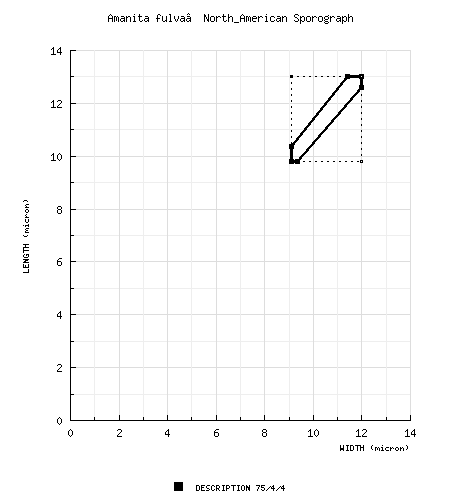

Text and User-Generated Sporographs are published under the Creative Commons License.

In the case of a taxon page, image credits are on the 'image' tab.