
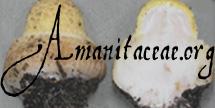

| name | Amanita austroolivacea |
| name status | nomen acceptum |
| author | Raithelh. |
| english name | "Argentine Death Cap" |
| cap | The cap is 120 - 180 mm wide, brown-olive to sordid olive, at first convex, later concave, with center sometimes appearing frosted-whitish, with a nonappendiculate margin, nonstriate at first, more or less distinctly crenate-striate with age. The flesh is whitish. The volva is present as several rather large patches, and is rather thick, cream colored, and appearing felted (use 10× lens). |
| gills | The gills are free to nearly free to narrowly adnate with a decurrent tooth, moderately distant to nearly distant in age, white, entire, with flocculose edges. The short gills are not described. |
| stem | The stem is 150 - 200 × 20 - 25 mm, cream, somewhat brownish in older specimens, somewhat slippery, and nearly cylindric. The bulb is subglobose and up to 45 mm wide. The flesh is rather firm. The ring is superior to submedian, membranous, skirt-like, and persistent. The limbate volva is thick, robust, white on both surfaces, with surface layers relatively easily separated mechanically in dried material. |
| odor/taste | The odor is lacking in fresh material but like honey in dried material. |
| spores | The spores measure (8.5-) 8.8 - 10.8 (-12.5) × (7.4-) 7.7 - 9.5 (-11.0) µm and are globose to subglobose to broadly ellipsoid and amyloid. Clamps were not observed at the bases of basidia. |
| discussion |
A. austroolivacea is present in moist Nothofagus forests including Chusquea. The general appearance of this mushroom strongly suggests Amanita phalloides (Fr. : Fr.) Link. The original description stated that the spores were inamyloid. Reexamination of the two known duplicates of the type demonstrate that the spores are amyloid, thus the species should be considered poisonous and possibly deadly until proven otherwise. Amanita austroolivacea differs from A. phalloides as follows: somewhat larger spores, broader and rounder spores, lacking in the thick-walled hyphae found in A. phalloides, and occurring in native forests rather than with imported plants. The reader may also wish to compare the present species with the Australian species A. austrophalloides A. E. Wood. Newly collected material of the present species is very much desired by the authors. This material should be carefully dried and be accompanied by good color images and careful annotation based on the collected specimens in their fresh state. This will allow us to make better judgment of this distinction between A. austroolivacea and A. phalloides.—R. E. Tulloss and E. Horak |
| brief editors | RET |
| name | Amanita austroolivacea | ||||||||||||||||||||
| author | Raithelh. 1974. Metrodiana 5: 72. | ||||||||||||||||||||
| name status | nomen acceptum | ||||||||||||||||||||
| english name | "Argentine Death Cap" | ||||||||||||||||||||
| synonyms |
≡Volvoamanita austroolivacea (Raithelh.) Raithelh. 1983. Metrodiana Sonderheft 2: 3. The editors of this site owe a great debt to Dr. Cornelis Bas whose famous cigar box files of Amanita nomenclatural information gathered over three or more decades were made available to RET for computerization and make up the lion's share of the nomenclatural information presented on this site. | ||||||||||||||||||||
| MycoBank nos. | 517340 | ||||||||||||||||||||
| GenBank nos. |
Due to delays in data processing at GenBank, some accession numbers may lead to unreleased (pending) pages.
These pages will eventually be made live, so try again later. Search:
Showing 0 to 0 of 0 entries | ||||||||||||||||||||
| holotypes | BAFC; isotype in ZT. | ||||||||||||||||||||
| type studies | Tulloss, here | ||||||||||||||||||||
| selected illustrations |
Raithelhuber. 1986. Metrodiana 14: 13 [unnumbered fig.; spores only]. Raithelhuber. 1987. Fl. Mycol. Argentina 1: 367, figs. 470-475. | ||||||||||||||||||||
| intro |
The following text may make multiple use of each data field. The field may contain magenta text presenting data from a type study and/or revision of other original material cited in the protolog of the present taxon. Macroscopic descriptions in magenta are a combination of data from the protolog and additional observations made on the exiccata during revision of the cited original material. The same field may also contain black text, which is data from a revision of the present taxon (including non-type material and/or material not cited in the protolog). Paragraphs of black text will be labeled if further subdivision of this text is appropriate. Olive text indicates a specimen that has not been thoroughly examined (for example, for microscopic details) and marks other places in the text where data is missing or uncertain. The following material not directly from the protolog of the present taxon and not cited as the work of Dr. Z. L. Yang or another researcher is based upon original research by R. E. Tulloss. | ||||||||||||||||||||
| pileus | 120 - 180 mm wide, brown-olive to sordid olive, at first convex, later concave, with disc sometimes appearing frosted-whitish; context whitish; margin nonstriate at first, more or less distinctly crenate-striate in age, nonappendiculate; universal veil present as several rather large patches, rather thick, cream (drying a somewhat reddish pale tan), with surface appearing felted (10× lens) in exsiccatum. | ||||||||||||||||||||
| lamellae | free to nearly free to narrowly adnate with decurrent tooth (Raithelhuber 1987: fig. 471), moderately distant to nearly distant in age, white, entire, with flocculose edges; lamellulae not described. | ||||||||||||||||||||
| stipe | 150 - 200 × 20 - 25 mm, cream, somewhat brownish in older specimens, somewhat viscous(?), nearly cylindric; bulb up to 45 mm wide, subglobose; context rather firm; partial veil superior to submedian, membranous, skirt-like, persistent; universal veil as limbate volva reminiscent of that of A. phalloides, thick, robust, white on both surfaces, with surface layers relatively easily separated mechanically in exsiccata. | ||||||||||||||||||||
| odor/taste | Odor lacking in fresh material and “honey-like” in exsiccata (per Raithelhuber). Taste mild. | ||||||||||||||||||||
| macrochemical tests |
none recorded. | ||||||||||||||||||||
| pileipellis | with shallow colorless gelatinized suprapellis 0 - 16 µm thick above brownish orange subpellis 75± µm thick; filamentous, undifferentiated hyphae 1.5 - 9.5 µm wide, branching, occasionally with yellowish subrefractive walls (quite commonly in hyphae of largest diameter, difficult to distinguish from vascular hyphae because of state of tissue, occasionally with a single coil, rarely with guttulate matter on inner wall surface, with all tip cells observed belonging in this group), dominantly subradially arranged, but also sometimes in criss-crossed fascicles, frequently not periclinally oriented (sometimes even perpendicular to surface and then often with yellowish subrefractive walls); vascular hyphae difficult to distinguish from other refractive hyphae because of state of tissue. | ||||||||||||||||||||
| pileus context | region nearest pileipellis concolorous with, but paler than, pileipellis; filamentous, undifferentiated hyphae 2.0 - 27 µm wide, plentiful, dominant near pileipellis, branching, often in fascicles (with these loosely interwoven), occasionally with subrefractive yellowish walls (quite commonly in hyphae of largest diameter, occasionally with a single coil; acrophysalides plentiful away from pileipellis, subfusiform to narrowly clavate to clavate to broadly clavate to subglobose, up to 103 × 54 µm, thin-walled; vascular hyphae not observed (see comments regarding refractive hyphae of pileipellis, above). | ||||||||||||||||||||
| lamella trama | bilateral, divergent; very poorly rehydrating in isotypes, with 50 - 70 µm between closest bases of opposing basidia; filamentous, undifferentiated hyphae 2.0 - 7.5 µm wide, branching; divergent, terminal inflated cells not observed; vascular hyphae not observed. | ||||||||||||||||||||
| subhymenium | very poorly rehydrating in isotype; ramose, comprising short branched or simple hyphal segments, with plentiful filamentous, undifferentiated hyphae running parallel to the hymenial surface directly below the basidia (possibly false appearance because of poor rehydration?). | ||||||||||||||||||||
| basidia | 30 - 59 × 7.5 - 12.5, dominantly 4-sterigmate, occasionally 2-, rarely 1-sterigmate, thin-walled; clamps not observed. | ||||||||||||||||||||
| universal veil | easily spreading and partially dissociating in mount; filamentous, undifferentiated hyphae. On pileus, exterior surface: criss-crossed fascicles of filamentous, undifferentiated hyphae, fasciculate or singly, gelatinized. On pileus, interior: partially gelatinized, somewhat collapsed; filamentous, undifferentiated hyphae 2.8 - 20 µm wide, branching, dominant, loosely interwoven, commonly in fascicles, with a few swollen intercalary segments (e.g., ovoid, 24 × 16 µm), with some tip cells slightly swollen, occasionally with yellowish subrefractive walls; inflated cells terminal, singly, scattered, narrowly clavate to clavate, up to 71 × 21 µm, thin-walled; vascular hyphae 5.8 - 13.5 µm wide, occasional, coiling, twisting, some times comprising clearly terminal segments. On pileus, inner surface: like interior, but slightly more gelatinized. On stipe base, exterior surface: as very thin, sparse, entirely hyphal layer; filamentous; undifferentiated hyphae 1.9 - 6.5 µm wide, branching, in rather robust fascicles (comprising narrowest diameter hyphae and up to 10 hyphal diameters wide) or singly, often collapsed or partially gelatinized, occasionally yellowish, sometimes with pale yellowish guttulate contents located at end of hyphal segment; vascular hyphae not observed. On stipe base, interior: [available material badly crushed] filamentous, undifferentiated hyphae 1.5 - 11.0 µm wide, branching, disordered, interwoven in moderately open lattice, sometimes constricted at septa, dominating, in fascicles (robust, up to 16 hyphal diameters wide) or singly; inflated cells as slightly expanded, narrowly clavate tip cells, unevenly distributed, scattered to locally clustered, up to 24 µm wide [damaged, lengths not determined]; vascular hyphae 5.3 - 14.1 µm wide, multiply branching, subsinuous, rare. On stipe base, inner surface: comprising co-parallel hyphae suggesting a pileipellis. orange-yellow, with surface extensively gelatinized and decorated with broken stubs of hyphae; filamentous, undifferentiated hyphae up to 6.0± µm wide, branching, single and in fascicles; vascular hyphae not observed. | ||||||||||||||||||||
| stipe context | [available material limited and in poor condition] longitudinally acrophysalidic; filamentous, undifferentiated hyphae 1.2 - 5.5 µm wide, branching, often in broad fascicles, dominating near external surface, very common in interior; acrophysalides up to 117+ × 20 µm, all seen broken; vascular hyphae 3.5 - 26 µm wide, rather common in some sections, sinuous, yellowish. | ||||||||||||||||||||
| partial veil | not located among available fragmentary material. | ||||||||||||||||||||
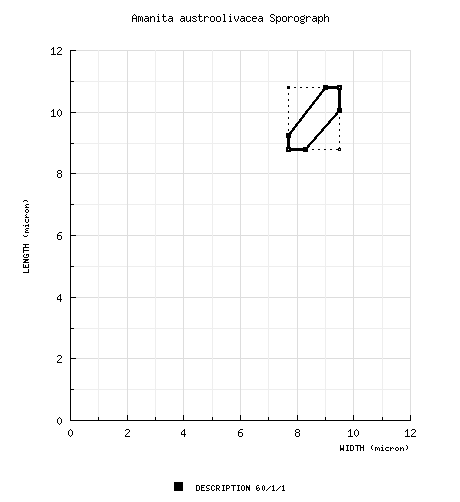
| basidiospores | From holotype and isotype: [60/1/1] (85-) 8.8 - 10.8 (-12.5) × (7.4-) 7.7 - 9.5 (-11.0) µm, (L = 9.9 µm; W = 8.8 µm; Q = (1.02-) 1.06 - 1.20 (-1.27); Q = 1.13). | ||||||||||||||||||||
| ecology | In moist Nothofagus forest including Chusquea. | ||||||||||||||||||||
| material examined | ARGENTINA: RÍO NEGRO—Parq. Nac. Nahuel Huapí, s.d. J. Raithelhuber 33-74 (holotype, ZT [Horak]; isotype, BAFC 32.763). | ||||||||||||||||||||
| discussion |
The isotype in BAFC consists of a portion of a large pileus with several patches of pallid, membranous universal veil. The holotype comprises about half of a pileus lacking universal veil material, fragments of a stipe, and a crushed bulb with attached volva. Raithelhuber’s illustrations show an entity strongly resembling A. phalloides which is enclosed in a membranous universal veil in the button stage and has a globose bulb at the stipe base. His reading of the spores as inamyloid [and the consequent placement of the species in sect. Vaginatae by Garrido and Bresinsky (1985)] is an error that could have dangerous consequences if material of this species were to be ingested. It should be considered poisonous and possibly deadly unless proven otherwise. It is important that this species should be assayed for the presence of amatoxins and phallotoxins. The refractive hyphae of the pileipellis appear not to be vascular hyphae, but this should be re-checked on material that is better preserved. Such hyphae do not originate on the pileus surface as might be expected if they were hyphae of a mold. The vascular hyphae of the universal veil are somewhat of the same form as the refractive hyphae of the pileipellis and pileus context—suggesting that at least some of the latter should be called vascular hyphae. However, nonvascular refractive hyphae of large diameter were also present in the universal veil which supports the opposite conclusion. Brownish yellow drops of liquid not dispersable in 3% KOH mounting medium were noted in the pileipellis and in the universal veil; there source is unknown. They do not have the appearance of the cloudy material that normally exudes from cuts or breaks in vascular hyphae. Based on the limited material available, the present species differs from Amanita phalloides in:
| ||||||||||||||||||||
| citations | —R. E. Tulloss | ||||||||||||||||||||
| editors | RET | ||||||||||||||||||||
Information to support the viewer in reading the content of "technical" tabs can be found here.
| name | Amanita austroolivacea |
| bottom links | [ Keys & Checklists ] |
| name | Amanita austroolivacea |
| bottom links | [ Keys & Checklists ] |
 Spore data sets and their composite
Each spore data set is intended to comprise a set of measurements from a single specimen made by a single observer; and explanations prepared for this site talk about specimen-observer pairs associated with each data set. Combining more data into a single data set is non-optimal because it obscures observer differences (which may be valuable for instructional purposes, for example) and may obscure instances in which a single collection inadvertently contains a mixture of taxa.

Text and User-Generated Sporographs are published under the Creative Commons License.

In the case of a taxon page, image credits are on the 'image' tab.