

| name | Amanita aureomonile |
| name status | nomen acceptum |
| author | Tulloss & Franco-Mol. |
| english name | "Gold Necklace Death Cap" |
| intro |
Amanita aureomonile is a curious species apparently known only from association with Colombobalanus (Trigonobalanus) in Andean Colombia. It has been tentatively placed in Amanita sect. Phalloideae. I know of only the two specimens in the holotype collection. The species was originally described in (Tulloss, Ovrebo & Halling, 1992). Macroscopic data on this species is rather limited. |
| cap |
The cap of A. aureomonile is 20 - 25 mm wide, bright yellow for most of its surface (darker in the center). The cap flesh is less than 1 mm thick and about the same color as the surface of the cap. In the known specimens, there was no volva on the cap. |
| gills |
The gills of this species are free, close, white, narrow, about 2 mm broad, and occasionally forking. There are short gills, but their frequency and form were not recorded. |
| stem |
The stem of this species is approximately 45 × 3 mm (length includes bulb), pale yellow, subcylindric, and bears a small, bright yellow, superior annulus. The stem has a subglobose bulb. The bulb bears a white, fleshy, limbate volva (further details not known). |
| odor/taste |
Odor and taste have not been reported for this species. |
| spores |
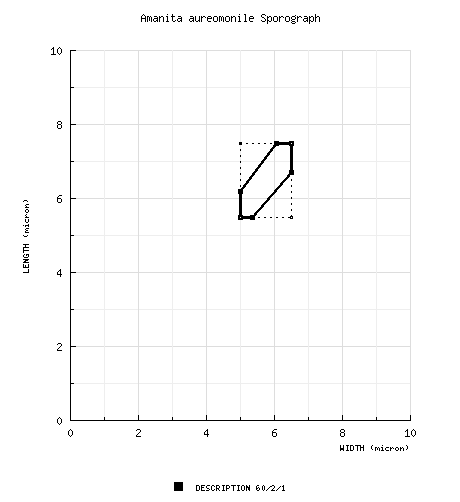
The spores measure (5.0-) 5.5 - 7.5 (-7.8) × (4.8-) 5.0 - 6.5 (-6.8) µm, are globose to subglobose to broadly ellipsoid (infrequently ellipsoid), and are amyloid. Clamps are relatively common at bases of basidia. |
| discussion |
The question of proper placement of
this species in Amanita is open. Clamps on
basidia is a very uncommon trait in sect. Phalloideae
—indeed, clamps are usually not found in brightly
pigmented species with amyloid spores—in sections Phalloideae
and Validae. It is not known if A. aureomonile actually
contains amatoxins or other poisons. There is no evidence that the species is used in any way
in Colombia. |
| brief editors | RET |
| name | Amanita aureomonile | ||||||||||||||||||||
| author | Tulloss & Franco-Mol. in Tulloss, Ovrebo & Halling. 1992. Mem. New York Bot. Gard. 66: 25, figs. 19-20. | ||||||||||||||||||||
| name status | nomen acceptum | ||||||||||||||||||||
| english name | "Gold Necklace Death Cap" | ||||||||||||||||||||
| etymology | aureus, "gold" + monile, "necklace" | ||||||||||||||||||||
| MycoBank nos. | 359393 | ||||||||||||||||||||
| GenBank nos. |
Due to delays in data processing at GenBank, some accession numbers may lead to unreleased (pending) pages.
These pages will eventually be made live, so try again later. Search:
Showing 0 to 0 of 0 entries | ||||||||||||||||||||
| holotypes | CUVC | ||||||||||||||||||||
| intro |
The following text may make multiple use of each data field. The field may contain magenta text presenting data from a type study and/or revision of other original material cited in the protolog of the present taxon. Macroscopic descriptions in magenta are a combination of data from the protolog and additional observations made on the exiccata during revision of the cited original material. The same field may also contain black text, which is data from a revision of the present taxon (including non-type material and/or material not cited in the protolog). Paragraphs of black text will be labeled if further subdivision of this text is appropriate. Olive text indicates a specimen that has not been thoroughly examined (for example, for microscopic details) and marks other places in the text where data is missing or uncertain. The following material not directly from the protolog of the present taxon and not cited as the work of Dr. Z. L. Yang or another researcher is based upon original research by R. E. Tulloss. | ||||||||||||||||||||
| pileus | protolog: ?? | ||||||||||||||||||||
| lamellae | protolog: ?? | ||||||||||||||||||||
| stipe | protolog: ?? | ||||||||||||||||||||
| odor/taste | protolog: ?? | ||||||||||||||||||||
| macrochemical tests |
protolog: ?? | ||||||||||||||||||||
| pileipellis | protolog: ?? | ||||||||||||||||||||
| pileus context | protolog: ?? | ||||||||||||||||||||
| lamella trama | protolog: ?? | ||||||||||||||||||||
| subhymenium | protolog: ?? | ||||||||||||||||||||
| basidia | protolog: ?? | ||||||||||||||||||||
| universal veil | protolog: ?? | ||||||||||||||||||||
| stipe context | protolog: ?? | ||||||||||||||||||||
| columnella context | double click in markup mode to edit. | ||||||||||||||||||||
| partial veil | protolog: ?? | ||||||||||||||||||||
| lamella edge tissue | not described. | ||||||||||||||||||||
| basidiospores | protolog: [60/2/1] (5.0-) 5.5 - 7.5 (-7.8) × (4.8-) 5.0 - 6.5 (-6.8) μm, (L = 6.6 - 6.7 μm; L' = 6.7 μm; W = 5.8 - 6.0 μm; W' = 5.9 μm; Q = (1.0-) 1.03 - 1.24 (-1.31); Q = 1.12 - 1.15; Q' = 1.13). | ||||||||||||||||||||
| ecology | protolog: Colombia: In forest of Trigonobalanus (=Colombobalanus) excelsa. | ||||||||||||||||||||
| material examined | protolog: COLOMBIA: VALLE DEL CAUCA—Mpio. Pance - Parq. Natural Los Farallones, above El Topacio, 17.xi.1988 A. E. Franco-Molano 156 (holotype, CUVC). | ||||||||||||||||||||
| discussion | This species is only known from the type collection. Unfortunately, there is no known illustration of a fresh basidiome. | ||||||||||||||||||||
| citations | —R. E. Tulloss | ||||||||||||||||||||
| editors | RET | ||||||||||||||||||||
Information to support the viewer in reading the content of "technical" tabs can be found here.
| name | Amanita aureomonile |
| bottom links | [ Keys & Checklists ] |
| name | Amanita aureomonile |
| bottom links | [ Keys & Checklists ] |
 Spore data sets and their composite
Each spore data set is intended to comprise a set of measurements from a single specimen made by a single observer; and explanations prepared for this site talk about specimen-observer pairs associated with each data set. Combining more data into a single data set is non-optimal because it obscures observer differences (which may be valuable for instructional purposes, for example) and may obscure instances in which a single collection inadvertently contains a mixture of taxa.

Text and User-Generated Sporographs are published under the Creative Commons License.

In the case of a taxon page, image credits are on the 'image' tab.